Get Full Government Meeting Transcripts, Videos, & Alerts Forever!
Get email alerts on the Budget Process topic
No spam. Unsubscribe anytime.
Madison panel pushes 0‑based budgeting for 2027 as storm raises cost pressures
Summary
Chair Sharon Schilling urged the Advisory Budget Committee to adopt a 0‑based approach and hold working sessions with the school board to justify personnel and other line items; members said reconciled QuickBooks numbers and a July working meeting will be needed to set targets amid storm‑driven expenses.
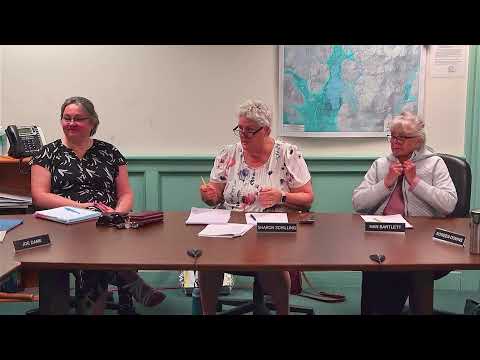
Chair Sharon Schilling told the advisory budget committee on June 16 that now may be the time to adopt 0‑based budgeting for the town and school budgets, asking department heads to document and justify each line item rather than rolling forward last year’s figures. "0‑based budgeting," Schilling said, "means you just start from scratch and set and put in your things that you know you need."
Schilling framed the idea as a response to shrinking school enrollment, rising costs and the recent storm, saying a piece‑by‑piece approach would make priorities clearer and better support recommendations to taxpayers. Members discussed focusing the first iteration on personnel — the largest budget component — and creating measurable work packages so the committee can evaluate requests with consistent metrics.
The committee also discussed the town’s bookkeeping and the need for full reconciled numbers. Selectman Joe Dame said the QuickBooks reconciliation is not yet final and reported that as of June 16 the town was about 45.7% of the way through the year in spending; he asked staff to deliver fuller financials for the July meeting. New town finance staff and a recently hired treasurer (identified as Christine Richardson in the meeting) were working with school finance staff to reconcile accounts and prepare monthly detailed drawdowns for committee review.
Members asked staff to draft specific objectives (personnel alignment, building utilization, health‑insurance cost‑sharing and SAU resource sharing) for July working sessions, including a proposed joint advisory budget committee–school board meeting on July 6 to begin detailed budget development. The committee agreed that numerical targets should be data driven rather than arbitrary percentage cuts.
Next steps: staff will provide reconciled QuickBooks reports and monthly drawdowns, and committee members will meet in July for more granular budget work to present prioritized recommendations ahead of the 2027 budget cycle.