Get Full Government Meeting Transcripts, Videos, & Alerts Forever!
Get email alerts on the Storm Response topic
No spam. Unsubscribe anytime.
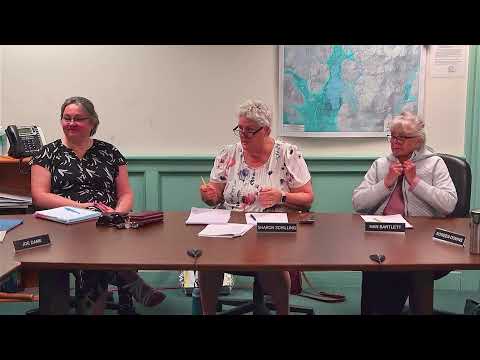
Madison budget committee hears storm damage estimates and seeks federal help
Summary
Selectman Joe Dame told the Madison Advisory Budget Committee that last week’s storm caused widespread road damage and heavy short‑term costs; the town is documenting damage for FEMA, estimating $12,000–$15,000 daily burn rates for crews and considering using reserves or a special town meeting to cover immediate repairs.
Selectman Joe Dame reported to the Madison Advisory Budget Committee on June 16 that last week’s storm caused heavy, widespread damage to town roads and prompted an immediate, resource‑intensive response from contractors and town crews. "We're burning about 12 to $15,000 a day," Dame said, describing multiple crews from local contractors working with DPW to make roads passable.
The committee heard details on the scale of the damage and the town’s effort to document it for federal aid. Dame said state and federal emergency management teams were on site and that the town was awaiting a preliminary damage assessment that will be used to determine eligibility for FEMA assistance. He cited a commonly used threshold for certain disaster assistance of roughly $2,670,000 in aggregate damage for the affected area.
Why this matters: the committee said those near‑term expenses could exceed routine budgeted amounts and will affect cash flow even if federal aid is later approved. Chair Sharon Schilling noted that while most roads were passable, repairs and heavy equipment use would continue for weeks and that contractor invoices for emergency work may not arrive for 30–60 days.
Dame and other members gave several specific financial markers that shape the town’s options. Committee discussion cited a current unassigned fund balance of about $1.3 million and preliminary bookkeeping showing the town is roughly 45.7% through the calendar year in spending. Committee members estimated a short‑term scope to make roads passable of several hundred thousand dollars (Dame described a rough ballpark of $300,000–$400,000 for immediate work), and flagged small but instructive repair costs — a transmission oil cooler part and associated labor for a loader that Dame said cost roughly $1,700 in parts and about $3,000 total.
State and federal elected‑office staffers and emergency management officials were said to be assisting with the damage documentation; Dame named several legislative and agency contacts who had been involved in fast‑track coordination. He said the town was tracking crew hours, equipment use, fuel consumption and maintenance to build the damage estimate FEMA requires.
The committee discussed short‑term options for covering expenses. Schilling suggested the town may need to tap unassigned fund balance or hold a special town meeting to authorize interim payments while the FEMA process proceeds. Several members emphasized the need to track actual contractor bills and to plan for staggered payments tied to incoming reimbursement decisions.
Next steps: staff will continue documenting damage, assemble the FEMA preliminary damage assessment once available, and bring fuller financial reconciliations to the July meeting so the committee can weigh funding and any potential warrant article for a special town meeting.