Get Full Government Meeting Transcripts, Videos, & Alerts Forever!
Get email alerts on the Administrative Rules topic
No spam. Unsubscribe anytime.
Board adopts rule to guide state dedication of gross receipts tax increment to metropolitan redevelopment areas
Summary
The Board adopted a new administrative rule (2.6.1.2 NMAC) establishing application, review, and oversight procedures for state dedication of gross receipts tax increments to metropolitan redevelopment areas; the adopted rule includes waiver authority, a twice-yearly application window, and allowances to use existing studies where appropriate.
The State Board of Finance adopted a formal rule to govern how the state will consider dedicating a portion of the state's gross receipts tax (GRT) increment to metropolitan redevelopment areas (MRAs).
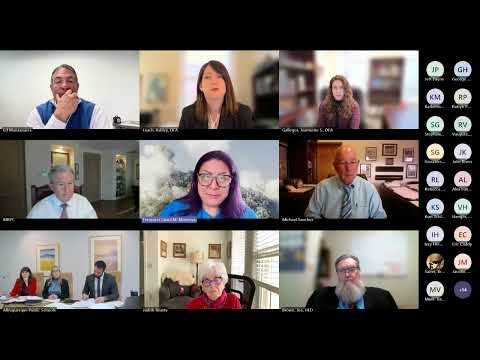
Director Ashley Leach outlined the rule’s purpose: implement the Legislature’s 2023 change allowing local governments — and the state — to dedicate incremental GRT to MRAs to address blight and facilitate redevelopment. The rule codifies the board’s review process, application contents, required financial and economic analyses, interagency review with DFA, NMFA, TRD and LFC, annual reporting and oversight, and an explicit waiver process so local governments with smaller or atypical MRAs can seek tailored requirements.
Leach told members that staff incorporated extensive public comment and had revised the draft to add flexibility: applicants may seek formal waivers of application components, existing local analyses can be used if sufficiently recent and justified, and the board will accept two application windows per year rather than one. "We still wanted to hold a high bar for the analysis and information that the board would receive for these requests," Leach said, while acknowledging the need to be responsive to the widely varying scale of MRAs across the state.
Bond counsel Luis Carrasco recommended the board adopt the concise explanatory statement that records the board’s rationale; members commended staff and the subcommittee for a lengthy, iterative process of drafting and public engagement. The board voted to adopt the proposed rule, subject to the rationale recorded in the concise explanatory statement and minor formatting corrections.
Why it matters: The rule sets the process the Board will use to evaluate whether dedicating state tax increment to redevelopment projects is fiscally defensible and in the state’s best interest, while offering mechanisms to adapt requirements for smaller or atypical local redevelopment efforts.
Next steps: Staff will file the rule and concise explanatory statement with the State Records and Archives Center; the effective date will follow publication in the New Mexico Register.