Get Full Government Meeting Transcripts, Videos, & Alerts Forever!
Get email alerts on the Land Use topic
No spam. Unsubscribe anytime.
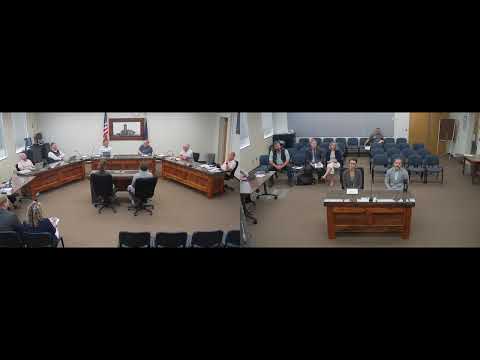
Polk County commissioners begin review of Riverbend Materials’ proposed 15.2‑acre expansion
Summary
The Polk County Board of Commissioners voted July 15 to initiate a legislative amendment (LA 2601) that will allow public hearings and technical study to consider adding about 15.2 acres proposed by Riverbend Materials to the county’s significant mineral and aggregate resource inventory.
The Polk County Board of Commissioners voted July 15 to initiate the legislative process that will allow the Planning Commission and the public to consider a request from Riverbend Materials to add an approximately 15.2‑acre area to the county’s significant mineral and aggregate resource inventory.
"The department has received a request for the Polk County Board of Commissioners to initiate the legislative process to amend the Polk County comprehensive plan to add a significant mineral and aggregate resource site to the inventory," said Hannah Brickener, senior planner with Polk County Community Development, opening the item. Initiation directs the Planning Commission to hold public hearings and requires an economic, energy, social and environmental analysis as part of the record.
Riverbend representatives told the board the expansion would extend production at the existing Riverbend West operation and reduce hauling costs and emissions. "If we choose not to explore mining this expansion area, it will cost the county and its development community about $25,000,000 over the next 8 years," said Daisy Goble, an independent land‑use consultant working with Riverbend Materials. Attorney Anderson Beals said the area was excluded from the county’s 1992 inventory decision but is largely surrounded by existing mine operations; he estimated the addition would extend the mine’s life by "7 to 8 years." Steve Smith, introduced by the applicants, said recent west‑side volumes are "plus or minus 300,000 tons," and described long hauls from alternative sites.
Planning staff emphasized that initiation does not itself permit mining. Staff told commissioners the county would oversee the public record, hearings and findings and would be responsible for demonstrating that inventory criteria are met; the applicant has offered to provide much of the technical work and bear a substantial share of costs. Staff also warned that appeals of any final decision could lead to legal defense costs at the Land Use Board of Appeals (LUBA).
Commissioners pressed Riverbend and staff about likely impacts and mitigations, including traffic, dust and noise, reclamation of mined land and state permits. A board member asked, "How are you going to make these sites whole again?" and said the public expects detailed reclamation plans. Planning staff and the applicants said state approvals (DOGAMI and Department of State Lands) and a final reclamation plan would be required before operations could proceed and that Riverbend planned community outreach and open houses.
After discussion, a commissioner moved to initiate the legislative amendment. The board recorded 'aye' votes and the chair announced the motion carries. The initiation opens the formal review process: the Planning Commission will hold public hearings, staff and the applicant will assemble the technical record, and the board will later hold its own hearing and take a final action that may be appealed.
Next steps: Planning staff will schedule hearings and the applicant has indicated it will prepare the studies and outreach materials required by the goal 5 amendment process. Any final decision could be subject to further review or appeal under state law.