Get Full Government Meeting Transcripts, Videos, & Alerts Forever!
Get email alerts on the Emergency Services topic
No spam. Unsubscribe anytime.
Rappahannock County outlines EMS upgrades, community paramedicine and county-funded AED rollout
Summary
County officials told the Washington town council the county now provides around-the-clock ALS coverage, has moved paid EMS staffing to extend coverage, has bought LifePak defibrillators, and will launch a two-paramedic community paramedicine program plus an expanded public AED deployment funded partly by opioid-abatement settlements.
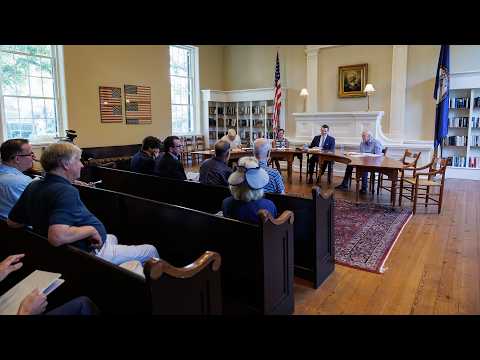
Kier Whitson, vice chair of the Rappahannock County Board of Supervisors, told the Town of Washington council that the county has bolstered emergency medical services to shorten response times for residents and visitors.
The presentation summarized current county EMS assets and funding: roughly $1.5 million in tax reimbursements for volunteer fire and rescue companies and about $1 million for paid paramedic staffing, totaling roughly $2.5 million in direct taxpayer support, Whitson said. The board also approved county purchases of Lifepak 35 defibrillators for volunteer companies and several non-monetary supports, including centralized drug management and coordinated scheduling.
Why it matters: Town leaders and business owners have raised concerns about EMS capacity as the community grows and visitor traffic increases. County officials said the investments and changes aim to maintain quick response times in the town and surrounding areas.
Whitson said the county’s advanced life-support unit, ALS 1400, is staffed 24 hours a day and is based adjacent to the sheriff’s office to speed arrivals. "ALS 1400 is our Rappahannock County Fire and Rescue Department. It's staffed by a roster of highly trained Advanced Life Support Paramedics," Whitson said. He added the board approved LifePak 35 purchases "for those companies who wanted them," a capital expense the county estimated at more than $400,000 in aggregate.
Darren Stevens, the county EMS coordinator, gave operational detail on call volumes and programs. He said ALS 1400 and county-paid staff supplemented the volunteer system and that last year ALS 1400 ran about 1,400 calls. On the community paramedicine program, Whitson said the county will staff two paramedics who will each work up to 16 hours a week to visit frequent 9-1-1 users, help manage medications, assess fall risk and connect residents with services.
"AEDs are remarkable, but they have to be deployed within 4 to 6 minutes to be effective," Stevens said, describing plans to place public-facing defibrillators in businesses and public sites and to map them through dispatch.
County officials said the county will fund, manage and map the AEDs, using opioid-abatement settlement money and private donations where available. They also said several pilot placements will use unlocked cabinets at first to test community uptake, with monitoring and geofencing to detect removal or relocation.
Council members expressed appreciation for the county’s support and noted the town contributes a significant portion of local funding that supports Company 1. The presentation concluded with an offer to run short hands-only CPR training for residents.
The council did not take formal action on the county’s proposals during the meeting; presenters said operational rollouts and placement details will proceed through county channels.
Provenance: topicintro SEG 201; topfinish SEG 855.