Get Full Government Meeting Transcripts, Videos, & Alerts Forever!
Get email alerts on the Health Policy topic
No spam. Unsubscribe anytime.
District health policy draft would bar student caffeine during school hours, align food sales with New Mexico Smart Snacks
Summary
The JEMEZ VALLEY PUBLIC SCHOOLS board reviewed a proposed health and wellness policy that would prohibit students from possessing or consuming caffeinated products during the school day without health-office approval, restrict flavored milk at lunch to plain whole milk, and require fundraising and food sales to meet New Mexico Smart Snacks standards.
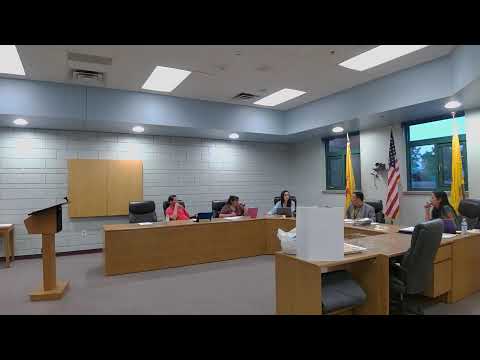
The JEMEZ VALLEY PUBLIC SCHOOLS board on Tuesday reviewed a draft revision to its health and wellness policy that would prohibit the sale and possession of caffeinated products by students during school hours and would align all school food sales and fundraising with New Mexico Smart Snacks standards.
Tracy Trio, the district’s health assistant, told the board that under the draft “beverages or products containing caffeine will not be sold on the elementary, middle, or high school campuses during the school day,” and that students may possess or consume caffeinated products only with prior approval from the health office for medical reasons. Trio said the revision includes an exemption process, for example for students with migraines with documentation from home or a 504 plan.
The draft also proposes limiting flavored milk at lunchtime to plain whole milk only and would bar outside vendors from selling food on campus during school hours. On fundraising, the draft would require items to meet Smart Snacks standards, with an allowance of up to two non–Smart Snacks fundraisers per year at the high school level only. Trio described the changes as an effort to align district practice with state guidance and reduce student exposure to unhealthy options.
Board members asked staff about implementation details, including whether concession stands and student-run food sales would be allowed. The staff member who presented the item said some concessions typically occur after school, and that administration could authorize narrow exceptions when appropriate. Board members and administrators discussed requiring that at least one adult working concessions hold a food-handler certificate; the staff member agreed such a requirement could be added as an amendment.
A board member moved to present a clean draft of the policy for first reading; another member seconded the motion on the record. The transcript records the motion and second but does not include a formal roll-call vote or a recorded outcome.
Next steps: staff will return the policy as a proposed first-reading draft for further board consideration and any amendments, and administrators will be asked to clarify operational details (concession supervision, vendor exceptions and medical-exemption procedures).