Get Full Government Meeting Transcripts, Videos, & Alerts Forever!
Get email alerts on the Budget Truth In Taxation topic
No spam. Unsubscribe anytime.
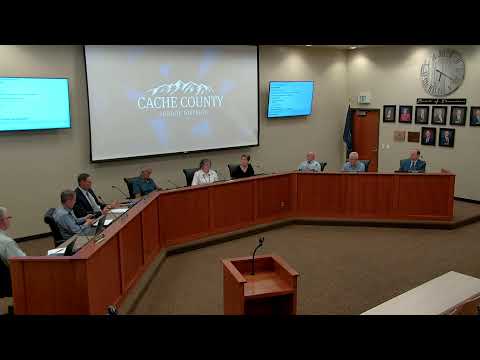
Cache County board outlines Truth in Taxation request, seeking $2 million for three new schools
Summary
At a July 16 meeting, the Cache County School District board discussed its upcoming Truth in Taxation hearing and the district’s need to raise about $2 million to fund three new schools, while staff explained how Utah’s equalization program affects local tax rates and urged clear public outreach.
The Cache County School District board on July 16 discussed a Truth in Taxation proposal to preserve and modestly expand district funding and to cover costs tied to three new schools. Business Administrator Scott Rigby told trustees the district needs an additional $2,000,000 to fund the new schools and that the FY2027 interim budget will be submitted for approval at the Truth in Taxation hearing on Aug. 6, 2026.
Why it matters: trustees said the proposal affects local property tax notices that many residents will read as a large percentage increase on a single line. Superintendent Todd McKee and others emphasized that in many cases the district must raise its local tax rate not to grow total revenue but to maintain stable funding under Utah’s equalization program.
"The quality of an education shouldn't be based on your ZIP code," McKee said, explaining the equalization program that aims to balance resources among wealthy and less‑wealthy districts. He told the board the program requires the district to set a particular local tax rate to receive roughly $8 million in equalization funding that helps keep programs stable.
Trustees and staff said the state’s property‑tax reporting rules can make the district’s ask look larger than the net effect on a household’s total tax notice. President Terry Rhodes and others asked district staff to prepare concise talking points and a two‑page Q&A to post on the district website and to hand out at public meetings so taxpayers can see how bond lines, state levies and the proposed voted/board levies interact.
Board members asked staff to provide an amortization schedule showing how bond payments decline over time. Scott Rigby said the district will work with bond counsel to produce a schedule that shows when particular bond lines are expected to drop, which trustees said would help residents understand how some portions of the tax bill decrease as principal is paid down.
What’s next: the district will present the interim FY2027 budget and a Truth in Taxation action item at the Aug. 6 board meeting, and staff will publish outreach materials in advance.