Get Full Government Meeting Transcripts, Videos, & Alerts Forever!
Get email alerts on the Land Use Data Centers topic
No spam. Unsubscribe anytime.
Board briefed on proposed 180-day moratorium and zoning changes for data centers and battery projects
Summary
City staff told the advisory board the council is considering a 180-day moratorium on new data center applications while it rewrites the Unified Development Ordinance to create size-based review categories and consider separate rules for battery energy storage systems; one applicant already in the queue would not be affected.
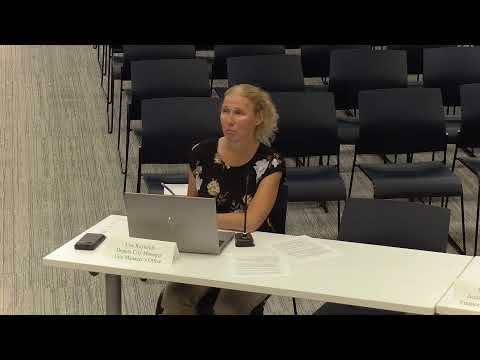
City staff told the Public Utility Advisory Board on July 16 that the City Council is considering a 180-day moratorium on new data center applications not already in process while staff works to amend the Unified Development Ordinance (UDO).
“The moratorium is simply there to give staff time to get those more permanent changes in place,” the deputy city manager said, explaining the proposed pause was presented at a June study session sponsored by Councilman Stewart. He said staff is proposing separate categories — accessory/server rooms, “small” centers up to 2.5 megawatts and “major” centers over 2.5 megawatts — so each category can face different restrictions or review processes.
Staff told the board the city’s current zoning treats many data centers as a use by right, and that change to a special-permit approach would allow the city to evaluate supply capacity and water and energy impacts before approvals. “Our current situation allows our zoning allows data centers as a use by right,” the deputy city manager said, adding that staff wants to ensure the utility can supply the capacity a project needs.
He warned of capacity constraints for large users over the next several years: “We have some serious capacity concerns for any kind of large user … going through ’27, summer and winter, both being even more of a concern,” he said.
Staff also noted that applications already filed would not be halted by the moratorium. The deputy city manager said one smaller applicant — identified in the meeting as Patmos — “had submitted an application, so they are not impacted by the moratorium because they're already in the queue.”
Board members pressed for more technical briefing on battery energy storage systems, which staff proposed treating as a separate moratorium and review track from data centers. One member asked for a concise presentation so the board can “get a basic knowledge base for us of what they are, how they work.” The deputy city manager agreed to arrange updates and an educational briefing as staff refines recommendations for the planning commission and council.
Staff also noted that an Able battery project had previously moved forward under a separate process and that intergovernmental agreements related to that project are already in place.
The planning commission reviewed staff’s recommendations in early July but did not accept them; staff said it will return with revised proposals before the council considers any ordinance changes. The deputy city manager said the moratorium would allow staff to complete those revisions.