Get Full Government Meeting Transcripts, Videos, & Alerts Forever!
Get email alerts on the Education High Reliability Schools topic
No spam. Unsubscribe anytime.
District director and presenters outline High Reliability Schools framework and teacher cohort
Summary
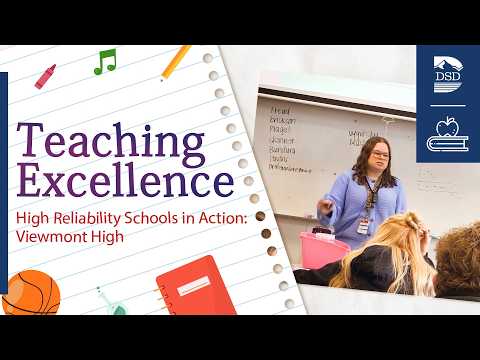
TJ Strain, the Davis County School District's Director of Teaching and Learning, described the High Reliability Schools (HRS) framework as a roadmap for school-level improvement; a presenter testified that HRS's data focus and a teacher cohort have re-energized classroom practice.
TJ Strain, the Davis County School District's Director of Teaching and Learning, opened the presentation by saying he has worked with the district for 22 years and has served as director for two years. He described High Reliability Schools (HRS) as a framework that gives schools autonomy to identify what is working and what is not, and a roadmap for making targeted instructional changes to improve student learning and outcomes.
A presenter who took part in the teacher cohort described HRS as a system that "helps meet the needs of all learners in a classroom" and stressed that the model requires teachers to use data to demonstrate the impact of instructional changes. "When you're collecting data, you're seeing where your students are at and moving with them," the presenter said, adding that HRS had "totally revamped the way I teach." The presenter said HRS encourages intentional setting of learning targets and collaboration among teachers across grade levels and content areas.
The presenter described a district-supported "high reliability teacher cohort" that brought together teachers from multiple grades, content areas and schools to meet and talk about instruction. "It just re-energized us to feel intentional about what we're doing in our classroom," the presenter said, and emphasized a shift in emphasis from test scores to student growth: "What are my students needing to learn, and how am I gonna get them there."
Strain returned to close the presentation by praising the district's teaching staff and noting that teachers have responded positively to the framework. "We're seeing some great things and our teachers are loving it," he said, framing HRS as a practical set of small changes and adaptations schools can apply to improve instruction.
The presentation outlined the district's approach to professional learning and classroom data use under HRS; no formal motions or votes were recorded during the session.