Get Full Government Meeting Transcripts, Videos, & Alerts Forever!
Get email alerts on the Traffic Safety topic
No spam. Unsubscribe anytime.
Atwater residents urge ‘Christopher’s Law’; council asks staff to refine traffic‑calming policy
Summary
Following a fatal collision involving a child, family members and residents pressed the Atwater City Council to adopt expedited, data‑driven safety measures—proposed as “Christopher’s Law”—and asked staff to add automatic reviews and clearer funding and appeal rules; staff and traffic consultants said some immediate measures can be implemented and will return with a revised policy Aug. 10.
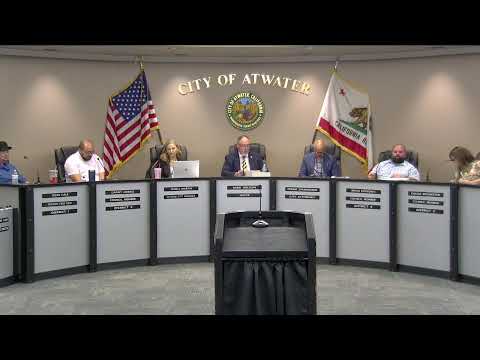
Mayor Nelson opened a review of the City’s draft residential traffic‑calming policy and invited staff to summarize the proposal and next steps.
Interim City Manager Martin and JLB Traffic Engineering consultant Jose Manuel said the draft is intended as a staff policy to guide how requests are evaluated and processed; they emphasized that the document is not a funding package and that permanent changes require later budgetary actions. Jose Manuel said some engineering countermeasures—in particular measures tied to visibility or clear MUTCD warrants such as all‑way stops—can be implemented quickly when data supports them and that temporary measures are generally tested on a 60‑day trial before being advanced.
Family members of the late Christopher Tejeda and others in the public asked the council to move faster and to write explicit triggers into the policy so serious crashes receive immediate attention. Christopher Verterra, a family member, said, “When a child has already lost their life, time matters,” and asked whether the city would take immediate steps before school starts. A representative of the Tejeda family urged the council to adopt the policy title “Christopher’s Law” and proposed language requiring the city to “initiate a comprehensive roadway safety assessment within 30 days” after any fatal collision involving a pedestrian, bicyclist or child.
Family speakers and other commenters listed suggested changes they said would make the policy proactive: an expedited path that waives the 60‑day trial for collisions involving fatalities or serious injuries; removing or lowering neighborhood‑ballot thresholds that can block safety projects; automatic measurable crash thresholds to trigger engineering review; a requirement for staff to publish pending requests and project status; and a dedicated residential traffic safety fund to ensure approved projects are implemented rather than only queued.
City staff and JLB acknowledged many of the suggestions as constructive. Jose Manuel said data collection and timing can limit certain studies (for example, speed studies performed outside of the school year can undercount peak volumes) but confirmed that case‑specific immediate measures—such as revised striping, temporary signage or an interim all‑way stop—can be put in place while a study proceeds. Interim City Manager Martin said staff will take written comments and return a revised policy for council consideration on Aug. 10.
Council members expressed sympathy for the family and a desire to both act quickly and remain within legal and engineering constraints. Mayor Nelson and others asked staff to identify near‑term steps (enforcement, temporary signage, targeted school‑hour patrols) that could be taken before the next council hearing.
Next steps: staff will collect written feedback, work with JLB Traffic Engineering on clarifying expedited procedures and reporting, and present a refined policy (and any recommended implementation funding options) at the Aug. 10 council meeting.