Get Full Government Meeting Transcripts, Videos, & Alerts Forever!
Get email alerts on the Water Infrastructure topic
No spam. Unsubscribe anytime.
EPW committee unanimously reports Water Resources Development Act of 2026 (S. 4949) after manager’s amendment
Summary
The Senate Environment and Public Works Committee favorably reported S. 4949, the Water Resources Development Act of 2026, after adopting a manager’s substitute amendment; the committee approved the bill by an 18‑0 roll call and deferred a separate nominee vote for Kevin Lilly.
Chair Capito opened the Senate Environment and Public Works Committee business meeting and called up S. 4949, the Water Resources Development Act of 2026, saying the bipartisan package "consists of two divisions" that authorize Army Corps projects and reauthorize EPA water programs.
The committee adopted a manager’s substitute amendment negotiated with Ranking Member Whitehouse and then voted to report the bill favorably. The clerk recorded 18 yeas and 0 nays on the roll call, and Chair Capito announced the bill as favorably reported. She also said the committee will hold the confirmation vote for Kevin Lilly, nominee for Assistant Secretary for Fish and Wildlife at the Department of the Interior, at a later date.
Why it matters: Division A would continue the biennial authorization of Army Corps studies and projects, add authorities to expedite delivery and preserve nonfederal sponsor roles, and includes state‑specific project authorities such as feasibility studies and expedited work on the Kanawha River Basin and Bluestone Dam in West Virginia. Division B reauthorizes and increases funding for EPA water infrastructure programs, including higher annual authorizations for the Drinking Water State Revolving Fund and Clean Water State Revolving Fund, grants addressing microplastics and geographic programs such as the Great Lakes Restoration Initiative, and investments in cybersecurity and workforce programs.
“By passing this bill, I believe with the modernization of systems...we will address significant needs,” Chair Capito said, pointing to provisions that support feasibility studies, drinking and wastewater projects, and authorities to expedite small projects.
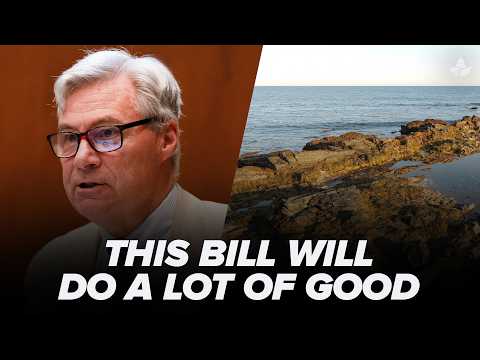
Ranking Member Whitehouse highlighted bipartisan compromises and said the package includes reforms from his Elevate Flood‑Prone Communities Act and pilot programs to support structure elevation and voluntary buyouts. He described EPA program authorizations in the bill as "nearly $7 billion" aimed at cybersecurity, small and disadvantaged communities and environmental restoration. Whitehouse added the bill creates a pilot to provide point‑of‑use filtration systems for homes at the far end of distribution lines to help mitigate PFAS and lead exposure.
Amendment activity and water affordability: Sen. Blunt Rochester offered an amendment with Sen. Padilla proposing a federal water affordability program modeled after LIHEAP to prevent shutoffs and help ratepayers; she said she would ultimately withdraw it. "While I support this legislation wholeheartedly, I think there is an area where it falls short, and that is meeting our country's growing affordability crisis," Blunt Rochester said. Padilla noted that pandemic programs helped about 1,400,000 households across 49 states avoid shutoffs and urged continued work on affordability measures.
Chair Capito thanked the sponsors for offering the amendment and for withdrawing it, acknowledged concerns about water loss and cost drivers tied to aging systems, and pledged to keep working with members on affordability within the bill’s framework.
State and program highlights: Senators on both sides praised the bill for delivering projects and authorizations to their states. Sen. Sullivan noted Alaska provisions, including measures to fast‑track Corps work in Western Alaska and a reauthorization that includes $240 million through 2030 for the Alaska Native Village sanitation program. Other members cited project wins for Rhode Island, Maryland (including Cumberland flood risk work and Chesapeake oyster recovery), Oregon (dredging and hatchery support), and initiatives such as Save Our Seas 2.0 and microplastics remediation.
Vote and next steps: The committee adopted the manager’s substitute by voice vote, then the committee report was approved on a roll call, 18‑0. Chair Capito said the committee will schedule the roll call on nominee Kevin Lilly at a future meeting. The meeting was then adjourned.
Notes: The article reports discussion, adopted amendments, and a committee vote as recorded in the committee business meeting transcript. Details about next procedural steps (full Senate floor consideration or conference) were not specified in the transcript.