Get Full Government Meeting Transcripts, Videos, & Alerts Forever!
Get email alerts on the Interim Superintendent Appointment topic
No spam. Unsubscribe anytime.
Interim superintendent candidate highlights safety grants and "open-book" budgeting in Lockwood K-12 interview
Summary
During an interview with the Lockwood School District board, the candidate emphasized open-book budgeting, a planned five-year budget outlook, experience with school-safety grant work and priorities around safety and student-centered decisions; she said she could begin immediately and accepted a previously discussed $130,000–$155,000 range.
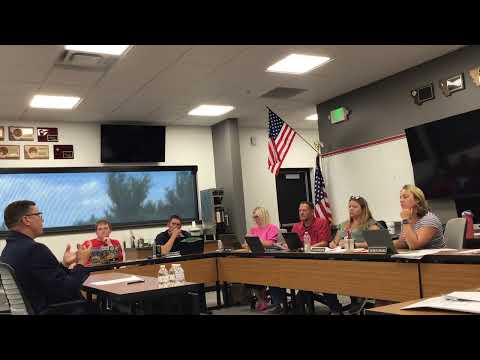
Meg Farber, who identified herself near the end of a board interview as an applicant for the interim superintendent post, told the Lockwood School District trustees she treats budgeting as an "open book" process, prioritizes student safety and has recent experience pursuing school-safety grants.
"When I think of budget, it it's across the board in my brain," Farber said, adding that the district she was discussing maintains a five-year plan and regularly revises priorities. She told the board she had been "working today with the grant writer" and expected a high probability of success for a COPS grant that she said would "enhance our budget with more than $15, focused on school safety," listing upgrades such as intercoms, PA systems and door locks as likely uses. (The transcript gives the grant amount as "more than $15," without specifying the unit.)
Farber described difficult cost-cutting choices—staff reductions, facility closures and program eliminations—as last-resort steps governed by district policy and collective bargaining. "Staff reduction, that's the last thing on my list," she said, and added that safety considerations would drive any urgent facility decisions.
On recruiting teachers and administrators, Farber pointed to local strengths and practical incentives. She said highlighting building quality, robust extracurriculars and finding candidates philosophically aligned with the district are key, and for smaller districts she cited strategies such as exploring housing and pay adjustments to attract staff.
Farber emphasized frequent, scheduled communication with trustees and visible leadership in schools. She said she would provide board packages in advance so members are not "caught off guard," lead professional development, and use MTSS/RTI cycles and early intervention to monitor student achievement.
Asked whether she would lead differently as an interim versus a long-term superintendent, Farber said her approach would remain consistent: "I wouldn't do anything different," though she noted contract terms and personal considerations could affect a decision to accept a longer-term role. When asked about start date and compensation expectations, she said she could "start tomorrow" while acknowledging moving logistics; the board referenced a previously discussed salary range of $130,000 to $155,000, which Farber said was within her range.
The trustees said they will continue interviews and use evaluation rubrics before considering appointment of an interim superintendent. The panel did not take a vote or make a decision at the close of this session.