Get Full Government Meeting Transcripts, Videos, & Alerts Forever!
Get email alerts on the Substance Use Treatment topic
No spam. Unsubscribe anytime.
Trainer and state official outline WITS GPRA workflow, SPARS validation changes and SOAR reporting
Summary
A recorded WITS training for North Carolina providers reviewed client intake, program enrollment, GPRA assessments and SPARS transmission; presenters warned of new CSV validation errors, explained the 5–8 month follow-up window, and clarified SOAR 3 versus SOAR 4 reporting.
Trainer Scott Wilson and state presenter Ellen Stroud led a recorded WITS grant-management training for North Carolina providers, explaining how to create client records, enroll clients in SOAR programs, complete GPRA intake/6-month/discharge assessments and transmit GPRA data to SAMHSA’s SPARS reporting system.
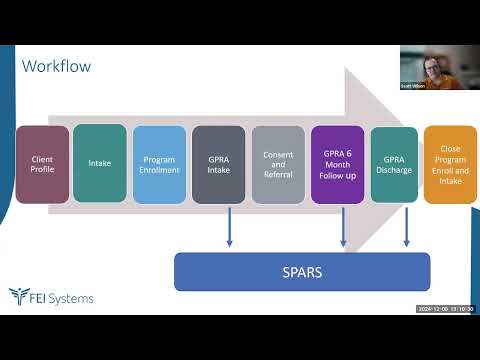
The session opened with Ellen Stroud summarizing the State Opioid Response grant and its reporting obligations: “This year, it'll be about $36,500,000 … 28,000,000 will go to treatment,” she said, and reminded attendees that GPRA assessments are a federal condition of the grant. Scott Wilson demonstrated the WITS workflow: search for an existing client, create a client profile (required fields include name, Social Security number, date of birth and provider client ID), start an intake episode, enroll the client in a SOAR program and then create the GPRA assessment.
Why this matters: GPRA records must be completed and locked in WITS to transmit to SPARS; incomplete or incorrectly completed assessments can prevent data from reaching SAMHSA and create grant-reporting problems. As Wilson put it, “The GPRA does need to be in the complete and locked status in order to transmit to SPARS.” The presenters noted SPARS has moved to CSV-format ingest for these records and that change has produced new validation errors programs may not have encountered before. Staff who receive unfamiliar validation messages were advised to notify state administrators so FEI/WITS and SPARS teams can troubleshoot.
Presenters also walked through content and timing rules that affect compliance. Agencies must attempt a 6-month follow-up interview for each SOAR intake; the follow-up window opens five months after the intake and closes after eight months. The session explained the GPRA statuses shown in WITS (within window, missed, compliant, noncompliant) and the GPRA follow-up due summary/detail reports that help agencies find clients whose follow-ups are due.
Scott Wilson and Ellen Stroud described differences between SOAR 3 and SOAR 4 reporting. They emphasized that the two are separate grant appropriations for reporting purposes: an individual who remains in services should not be discharged merely because reporting periods change, and agencies completing SOAR 3 follow-ups should continue to do so even as they enroll new clients in SOAR 4.
The training highlighted several practical data-entry validation rules attendees should note: numeric fields for days/sessions cannot be negative and must be between 0 and 999; if a program records recovery planning under treatment services, it must also record recovery planning under recovery support services with the same session count or SPARS will reject the discharge GPRA. Wilson warned explicitly that this last condition has been causing rejections and urged staff to verify paired fields before completing a discharge GPRA.
The presenters demonstrated creating consents and referrals in WITS: after creating a client disclosure agreement, staff can use a single button to create a referral that appears for the receiving agency on its WITS home page. The receiving agency then reviews the referral and can accept it, which generates a client record at the receiving agency and allows that agency to complete subsequent GPRA follow-ups.
The training session was recorded and will be posted on the DHHS website; presenters asked participants to complete a short survey and to contact their agency superuser if they are locked out of FEI WITS. The session closed with contact instructions for state administrators and FEI support.