Get Full Government Meeting Transcripts, Videos, & Alerts Forever!
Get email alerts on the Floodplain Ordinance topic
No spam. Unsubscribe anytime.
Planning commission opens review of floodplain rules after Riverview campground damage
Summary
At a 2024 meeting, the Narrows Planning Commission began revising its flood damage prevention ordinance after recent flooding at Riverview Campground, discussing enforcement, evacuation plans and differences between local, county and federal language; no ordinance changes were adopted.
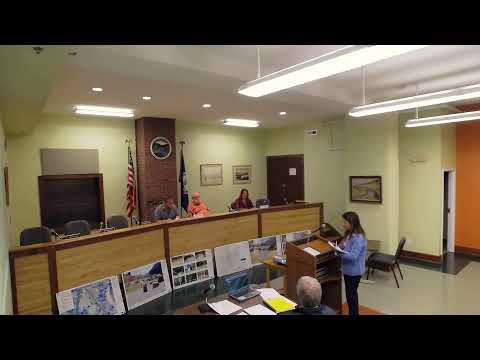
The Narrows Planning Commission on 2024 opened a review of the town's flood damage prevention ordinance, focusing on how to treat recreational vehicles and campgrounds in the floodplain after recent flooding at Riverview Campground.
Chair (speaker 1) turned the discussion over to Afi (speaker 3), who flagged gaps in the ordinance'noting missing definitions for basement, elevated building, encroachments and the special rules that should apply to accessory structures in a flood hazard district. "We need to add about alterations, accessory structures," Afi said, urging the commission to make definitions precise so the ordinance can be enforced consistently.
Why it matters: commissioners said unclear wording creates enforcement challenges and may affect eligibility for federal assistance. Staff and commissioners noted that the town's current language differs from the county's and from the Department of Conservation and Recreation (DCR) interpretation of FEMA guidance, producing ambiguity about when an RV or mobile unit counts as a temporary unit versus new construction.
Staff member (speaker 6), who has been coordinating with campground owners and the county building official, described several compliance options used elsewhere and stressed the need for clear, enforceable rules. "We won't allow any more decks to be built. We won't allow roofs to be put over an RV," the staff member said, describing owner commitments to avoid permanent additions that would prevent moving units in a flood.
Commissioners and residents also discussed practical enforcement steps. Staff said owners had been receptive to evacuation planning and to measures such as requiring units to be "road ready" so they can be moved when a flood threat approaches. Staff proposed surveying and marking base flood elevations on campground sites so future electrical and infrastructure work can be raised above reference points.
Residents who had camped at Riverview recounted how older units were often grandfathered but new arrivals faced stricter size limits for decks and porches. One resident said some people were required to remove portions of decks to comply with historic campground rules.
Legal and regulatory path: staff recommended drafting ordinance language that closely mirrors the federal Code of Federal Regulations and then sending the draft to DCR for review to reduce the risk of conflicting interpretations with FEMA. Commissioners discussed the difficulty of proving permanent residency in court and said that enforcement would likely focus on property owners and site-level conditions.
No formal decisions were reached. The commission did not vote on ordinance changes and instead directed staff to prepare draft revisions, coordinate with the county and state review agencies, and return with recommendations. The meeting was adjourned and members indicated they will resume detailed discussion in December.