Get Full Government Meeting Transcripts, Videos, & Alerts Forever!
Get email alerts on the District Goals Special Education topic
No spam. Unsubscribe anytime.
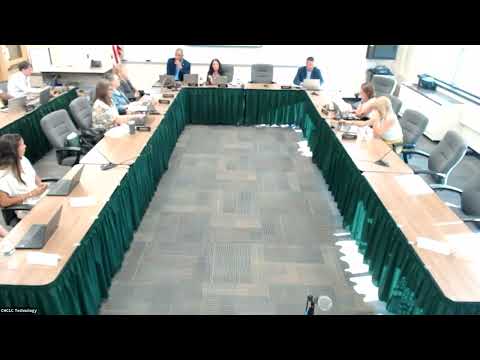
Cherry Hill board advances strategic goals, prioritizes dyslexia screening and ClearGov launch
Summary
The Cherry Hill Board of Education on July 9 reviewed proposed district goals across five priorities, emphasized inclusion and dyslexia screening, and backed a ClearGov financial-transparency dashboard set for a public rollout around September.
The Cherry Hill Board of Education reviewed five strategic priorities at its July 9 meeting, placing renewed emphasis on special-education inclusion, early dyslexia screening and a financial-transparency tool the district plans to roll out this fall.
Board President (speaker 1) opened the work session by reviewing committee feedback on priorities that included preschool expansion, math and ELA benchmarks, experiential-learning pathways and measures to support students with disabilities. The president told colleagues the district will continue advocating at the state level after noting it did not receive increased aid in this year’s budget.
Superintendent Dr. Morton (speaker 8) outlined near-term operational tasks and summer programming and described the labor-management collaborative (LMC) as a framework that gives staff a role in decision-making. On ClearGov, district leaders said the public-facing dashboard should be ready for a September demonstration and will show current-year financials first, with historical data added shortly after. Committee KPIs include platform implementation, stakeholder feedback, usage growth, and compliance with accessibility standards.
The board’s special-education discussion focused on expanding inclusion at the building level, increasing principal engagement, and adding measurable KPIs for training and family-facing supports. The committee recommended broader screening for literacy challenges, including dyslexia, regular sharing of DIBELS results with families and targeted professional development. A parent, Kim Gallagher (speaker 10), praised the attention to dyslexia and urged the district to consult families who have used structured literacy approaches: “There are resources out there. There are proven methods that work for students,” she said.
Administrators described planned steps to monitor middle-school math performance after recent structural changes and said they will track benchmark participation while awaiting NJSLA results delayed by a new adaptive test. On facilities, the superintendent said renovations at Rosa will add instructional space and the district will monitor enrollment trends before proposing further goal changes.
The board requested committee feedback be returned to administration for revisions to the draft goals and said members expect a final draft and a vote in the next meeting cycle.
What’s next: Administration will revise the draft goals incorporating committee input and bring a final proposal to the board for approval at the upcoming meeting cycle.