Get Full Government Meeting Transcripts, Videos, & Alerts Forever!
Get email alerts on the Data Centers topic
No spam. Unsubscribe anytime.
Staff explains state limits on local moratoria for data centers, warns of legal uncertainty
Summary
City staff summarized new state statutes affecting local regulation of data centers, noting a statute effective 07/01/2026, a 50‑megawatt threshold for 'large load' customers, reclaimed-water requirements, and legal uncertainty around moratoria that could expose the city to litigation.
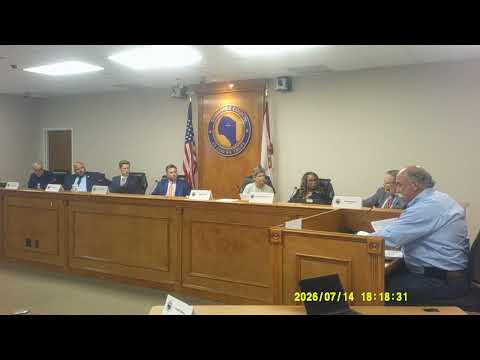
City staff delivered an extended briefing on changes in state law that affect municipal authority to adopt moratoria or more restrictive land‑development rules related to data centers.
The staff presenter summarized a statute (cited in the meeting as section 163.326, effective 07/01/2026) that preserves certain local planning and land‑development authorities while defining "data center" and ‘‘large‑scale data center.’’ The presenter said the statute requires that, where applicable, an electric utility and the data center agree to a tariff or surcharge so that the data center’s usage does not raise rates for other customers.
"A large load customer is a customer with an anticipated monthly peak load of 50 megawatts or more," the presenter said, and added that the state also included requirements for water permits and the use of reclaimed water when feasible for cooling systems.
Staff also summarized Senate Bill 180 language that limits local governments’ ability to propose or adopt moratoria, more restrictive amendments to comprehensive plans or land‑development regulations, or stricter procedures for development approvals through 10/01/2027 in certain disaster‑declaration counties. Staff emphasized legal uncertainty about how courts will define "property" and "damage" under the moratorium restriction language, noting a pending litigation history that includes a case from the City of Destin and accompanying private‑citizen litigation. The presenter warned that if the city imposes a moratorium and a landowner successfully challenges whether a particular property was "damaged," the city could face legal costs and possible injunctions.
Staff closed with practical considerations for the council to weigh before pursuing a moratorium: identify suitable local properties for large data centers, confirm local water availability and reclaimed‑water options, and consider litigation risk and costs if the city were challenged on whether particular properties qualify as "damaged" under the statute.
The briefing was informational; the council did not adopt a moratorium during the meeting.