Get email alerts on the Board Finance topic
No spam. Unsubscribe anytime.
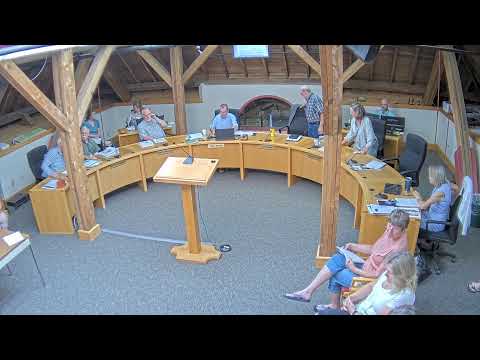
Barry County commissioners approve routine claims, invoices, small grants and delegate appointments
Summary
On July 14 the Barry County Board of Commissioners approved the consent agenda, prepaid invoices of $7,812,657.08, claims of $125,832.83, a $421.95 mileage reimbursement pool, a $1,500 hazardous materials preparedness grant acceptance, and appointed delegates to a municipal retirement-system meeting.
At its July 14 meeting the Barry County Board of Commissioners approved a set of routine financial and governance items.
The board approved the consent agenda and adopted the minutes of the June 23, 2026 meeting. It then approved prepaid invoices totaling $7,812,657.08 and claims totaling $125,832.83 after motions and roll-call votes.
Commissioners also authorized commissioner mileage reimbursements totaling $421.95.
The board accepted a $1,500 Hazardous Materials Emergency Preparedness Agreement Grant, authorized the chair to sign the agreement and approved a related training opportunity for staff. The grant will purchase two licenses (quoted at $250 each) to provide first responders access to tiered hazardous-materials reports for county and city sites.
Finally, the board approved appointing Eric Zuska as officer delegate and Tammy Price as alternate delegate to attend the 2026 Municipal Employees Retirement System annual meeting in Grand Rapids (Oct. 8–9) and approved payment of delegate expenses.
All motions passed by roll call with absences noted in the transcript; no items were tabled or referred for further study during this meeting.
AI generated
The text on this page is AI generated. Summaries, highlights, analysis, and video transcripts are all produced from the original source material.
AI can make mistakes, so if you spot one, and we will fix it for everyone.
Note: the source content is unaltered by us. Any content source we link to, be it a video, an audio recording, or a document, is presented exactly as its publisher released it. That publisher is usually a government body, sometimes an individual official or another organisation.