Get Full Government Meeting Transcripts, Videos, & Alerts Forever!
Get email alerts on the Homelessness Policy topic
No spam. Unsubscribe anytime.
DeKalb council pulls proposed no‑camping ordinance from tonight’s agenda after hours of public comment
Summary
After heated council discussion and more than an hour of public testimony, DeKalb Mayor and council moved ordinance 2026‑024 off tonight’s agenda and directed further work by the existing task force and staff. Speakers across the room urged services, not fines; council and staff stressed legal limits on involuntary removal.
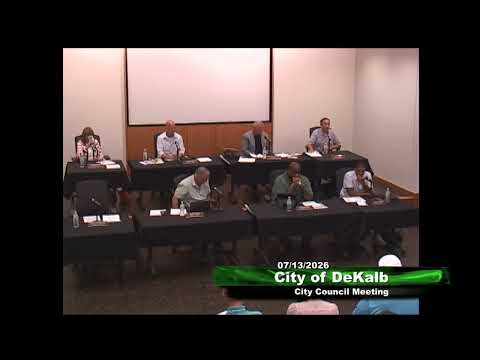
DeKalb’s City Council on July 13 voted to remove a proposed ordinance that would have restricted public camping from the evening’s agenda after an extended council debate and a lengthy public‑comment period.
Mayor Barnes opened the meeting by asking for a motion to approve the agenda with a modification removing ordinance 2026‑024; the motion was moved and seconded and carried by roll call after discussion and one dissenting vote. The council then invited members of the public to comment on the issue before continuing other business.
The council debate before public comment centered on two competing priorities: public safety and the limits of municipal authority. Alderman Solomon Walker criticized the ordinance’s proposed fines, calling them “asinine and absurd to put fines in there with homeless people who can’t afford anything,” and urged the council and staff to focus on victims of recent attacks and on improving pathways to services.
Other members framed the issue differently. One alderman described instances where a pregnant woman and other residents faced safety risks in parks and along Sycamore Road, saying the intent of the measure was to protect public safety even while rejecting punitive fines as the principal remedy.
The city attorney told the council there is no legal authority to remove people from public property without consent unless they meet involuntary‑commitment criteria or have committed crimes; arrest remains the lawful remedy for criminal acts.
Public comment that followed was overwhelmingly critical of the ordinance in its current form and urged investment in services and housing rather than penalties. Speakers included nonprofit leaders, residents with lived experience and local faith groups. Olive Woods told the council, “Hope Haven currently has 3,000 households on the wait list for vouchers and assistance,” warning that criminalizing sleeping in public would simply overload already strained providers. Duane Brown and others argued the city’s only licensed shelter (Hope Haven) lacks capacity and that fines would be unenforceable for people without resources.
Several commenters urged a broader, data‑driven strategy that brings together service providers, public‑health experts and people with lived experience. Danita Sims, director at OpportunityCALB, described local entrepreneurship and workforce programs funded in part by the city and thanked council members for earlier seed funding that supported a Breakthrough Business Academy for local entrepreneurs.
After the public comment period the mayor reiterated that the ordinance would not be discussed tonight, that the ad hoc group (an official subcommittee of the Northern Illinois Homeless Coalition) will continue working, and that staff and council would revisit the issue following additional task‑force meetings and legal review.
The council’s action was procedural (removal from the immediate agenda) rather than a final ruling on the ordinance’s substance. Next steps identified on the dais included additional task‑force meetings, further legal and policy review by city staff, and outreach to service providers and community groups.