Get Full Government Meeting Transcripts, Videos, & Alerts Forever!
Get email alerts on the Animal Control Spay Neuter topic
No spam. Unsubscribe anytime.
Council advances mandatory spay/neuter changes on second reading, schedules further committee review
Summary
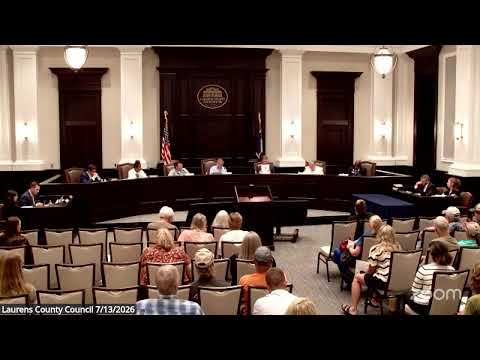
On July 13 the council advanced Ordinance 10-11 (amending county code 9-35) on second reading to add targeted mandatory spay/neuter triggers and penalties; debate focused on a 30‑day compliance timeline, veterinary capacity, funding and appeals processes; vote 7-0.
Lawrence County Council advanced Ordinance 10‑11 on second reading July 13, a revision to county ordinance 9‑35 that adds targeted mandatory spay/neuter provisions and penalties for repeated violations. Councilman Matthew Brownlee summarized key provisions, and animal‑control staff and community members asked for clarifications and added veterinary input before final approval.
"This ordinance backs up an animal control ordinance that we already have in place, but what this would be is a mandatory spay and neuter ordinance," Councilman Matthew Brownlee said. He listed triggers that could require spay/neuter orders: a dog found running at large with two or more violations within 12 months, dogs declared a nuisance or dangerous, female dogs in heat roaming at large, and unpermitted breeding. The ordinance provides medical exemptions and an appeals process and proposes breeder registration managed by the sheriff's office.
During public comment and committee discussion, veterinary capacity and timelines were the central concerns. Veronica Cordoville and animal‑control representatives said clinics are often booked and local providers may not be able to accommodate a 30‑day surgical window; Caroline Bernard (animal control) said the county will work with low‑cost partners and transport options and noted the shelter fluctuates in volume — "Right now, we have 85," she said when asked about shelter capacity. Council members and the county attorney recommended including a detailed SOP or exhibit outlining the appeals process and breeder registration forms to ensure clarity for citizens and enforcement.
The committee previously added a fee structure for failure to comply (starting at $100 and up to $500), and Brownlee said he expects a third reading in August and requested another committee meeting with veterinarians and stakeholders before final action. The vote on second reading was 7 in favor, 0 opposed.
Next steps: the committee will schedule a pre‑third‑reading meeting with veterinarians and animal‑control staff to refine timeline language, funding mechanisms for low‑cost spay/neuter options and an appeals SOP that can be appended to the ordinance.