Get Full Government Meeting Transcripts, Videos, & Alerts Forever!
Get email alerts on the Goat Farm Pud topic
No spam. Unsubscribe anytime.
Porter planning commission reopens public hearing on ‘Goat Farm’ mixed‑use PUD, asks for more detail
Summary
The Porter Planning Commission opened a public hearing on the proposed Goat Farm planning‑unit development, heard extensive public comment on traffic, utilities and density, and voted to continue the hearing to Aug. 19 to allow the commission and technical review staff time to study updated plans and TAC recommendations.
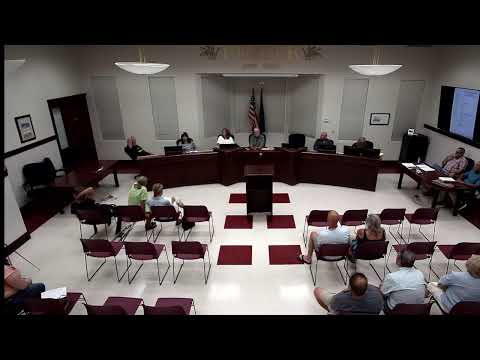
The Porter Planning Commission opened a public hearing July 14 on a proposed mixed‑use planning‑unit development known in the materials as the "Goat Farm," heard roughly two hours of public comment and discussion, and voted to continue the hearing to Aug. 19 to allow staff and the developer to supply additional technical detail.
Kevin Spellacy, who identified himself as the owner and developer of the Goat Farm property, presented an overview and said the project is planned as a phased, mixed‑use village with residential units, a market and event venue, and a roughly 240‑kilowatt solar field occupying about an acre. "We're trying to create an experience," Spellacy said, describing a farmstand, gift shop and a demonstration herd that would produce goat cheese and other products.
Neighbors raised concerns across multiple issues: traffic and single access, sewer and water capacity, potential pipeline safety where a 16–20‑inch pipeline crosses the site, the scale and density of units, and the risk that phased construction could remain incomplete. Paul Poprod, a longtime resident, asked who would pay for new utilities and warned that concentration of housing and commercial activity at a single egress could strain emergency services and increase accidents on US‑20. "That's going to put a strain on us," Poprod said.
Commissioners and staff pressed the developer for more specific technical materials: a detailed site plan with building footprints, maximum heights, parking counts, detention‑pond locations, and clearer phasing schedules. Staff and the commission also asked TAC (the technical review committee) to reconvene with police, fire and public‑works staff to confirm whether infrastructure and emergency services capacity would be adequate at full build‑out.
Spellacy said phase 1 would be designed to stand on its own and he hoped to begin construction in 12–18 months, with phase 2 following when occupancy and refinancing permitted — roughly two to three years. On financing and infrastructure he said the developer expects to build on‑site sanitary and storm systems and to contribute toward any off‑site lift‑station upgrades the town requires. "We're going to be bringing all that infrastructure in," Spellacy said.
After hearing public comments and staff recommendations, a commissioner moved to continue and keep the public hearing open so the commission could absorb the new packet and request any additional information. The motion passed on roll call with members answering in the affirmative; the commission set a continued hearing for Aug. 19.
What’s next: the developer was asked to submit a more detailed site plan and draft PUD and to provide the packet to the public electronically and at Town Hall. TAC was asked to re‑review the revised materials and report on traffic, fire/EMS and sewer capacity prior to the continuation.
Vote: The commission voted to continue the Goat Farm public hearing; roll‑call votes were recorded and the motion carried.