Get Full Government Meeting Transcripts, Videos, & Alerts Forever!
Get email alerts on the Slps Portfolio Models topic
No spam. Unsubscribe anytime.
Dr. Berry presents three SLPS portfolio models as district faces attendance and budget challenges
Summary
At a Vashon High School engagement session, Dr. Berry laid out three portfolio models to address falling enrollment, aging facilities and a reported $41 million budget gap; residents pressed for details on magnet-program changes, transportation, student safety and reuse of closed buildings.
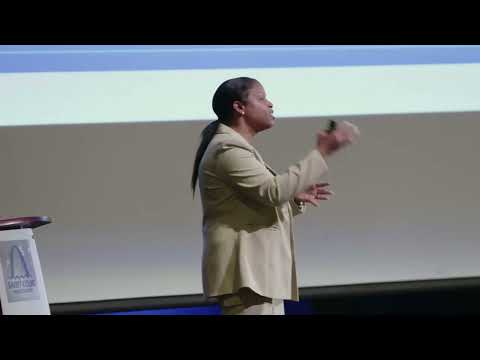
Dr. Berry led an engagement session at Vashon High School to gather community feedback on three district "portfolio" models intended to address falling enrollment, aging facilities and operational strain. She said the district has narrowed planning to three options and asked participants to focus comments on the models rather than single schools. "We presented and got approved what we're hoping we don't need, but a $41,000,000 deficit," Dr. Berry told the room, framing the urgency for planning.
The district presented data on enrollment and facilities: recent enrollment counts of roughly 17,200 students, a mobility rate of about 33.4 percent and an estimated 20‑year facilities need cited as roughly $1.8 billion. Dr. Berry also flagged staff shortages and vacancies, saying the district has about 300 certified teacher openings. She outlined projected operational impacts for the three models: Model A (least disruptive) would leave the district near 42–47 schools and modestly reduce bus routes; Model B would introduce more PK–8 options with a similar school count; Model C (the most disruptive) would shift most neighborhood schools to PK–8 configurations and reduce the district to roughly 40–42 schools and about 150 bus routes in the district's estimates.
On programming, Dr. Berry said the district intends to move away from the current "magnet" label toward "specialized pathways" embedded in neighborhood schools. When asked directly whether "all magnet schools are going to be eliminated," Dr. Berry responded that "the concept of magnet schools as they stand today" would change into specialized pathways, emphasizing that the engagement process would inform how resources and programs are maintained or restructured.
Residents and staff raised repeated concerns about transportation, safety and community impact. Commenters asked how the district will keep younger and older students separated in PK–8 sites, how dismissal logistics would be handled and whether closures would harm neighborhood stability. One attendee asked whether the district's real estate office is working with developers and whether TIF or other financing could support reuse of closed buildings; Dr. Berry said the district is listening and would publish FAQs and follow-up information. A teacher who said she works at Gateway described parents who value magnet programs and warned some families could leave if specialized programming is removed.
State Rep. Marty Jarma (78th District) attended and urged the district to name the specific academic outcomes it expects from any model and to identify what the district would need from the state to support transitions. Several parents urged the district to consider early-childhood expansion as a strategy to attract families back to the city.
Dr. Berry closed by thanking attendees, reminding the public that no final decisions would be made at the session and encouraging ongoing review of the packet and further feedback; she said the district will compile the input for an upcoming board presentation. The district cited a July 28 board meeting as the next formal milestone for presenting community feedback.