Get Full Government Meeting Transcripts, Videos, & Alerts Forever!
Get email alerts on the Transportation topic
No spam. Unsubscribe anytime.
Selectmen approve making sections of Chester Turnpike and Reynolds Avenue one‑way after safety hearing
Summary
After a public hearing, the Allenstown Board of Selectmen voted to convert a short section of Chester Turnpike (between Granite Street and Route 28) and parts of Reynolds/Ferry/Whitten/Woodland streets to one‑way traffic, citing safety and TRC recommendations; nearby business owners urged the board to minimize impacts on customer access.
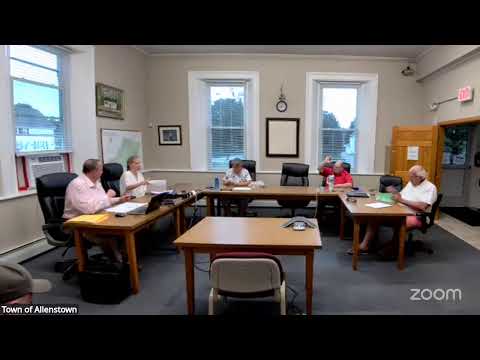
The Allenstown Board of Selectmen voted July 13 to make specified stretches of Chester Turnpike and Reynolds Avenue one‑way after a public hearing in which planners and residents described frequent traffic conflicts and constrained space for emergency vehicles.
At the hearing, a staff member summarizing the Technical Review Committee's (TRC) work said growth and development near Route 28 have increased left‑turn conflicts. "If you regularly use Chester Turnpike to cross Route 28, especially in the morning and the afternoon, you understand it is very difficult," the staff member said, urging that removing certain turning movements would reduce motorists attempting dangerous crossings.
The board's decision applies to the short Chester Turnpike segment between Granite Street and Route 28 and to a set of residential links around Reynolds Avenue: Chester Turnpike traffic will be directed so that traffic flows onto Route 28 only in the specified way, and Reynolds/Ferry/Whitten traffic patterns will be reconfigured to prevent certain left turns, per the planning stipulation discussed at the meeting. The planner explained the change is intended to remove left‑turn traps and to reduce truck and industrial traffic mixing with residential flows.
Several residents and public‑safety speakers told the board that emergency access and narrow roadway geometry create near‑misses when two vehicles meet; one resident described having to back into a yard because there was no room to pass. Fire and neighborhood speakers said a one‑way pattern would reduce head‑on encounters and make responses safer.
Michael Gambino, who identified himself as a McDonald's owner and said he is active with the town's EDC, told the board he supports safety but asked the Selectmen to consider the business impact. "Traffic flow and customer access greatly affects our business," he said, requesting that access to the restaurant not be unduly restricted.
The board discussed notices and coordination with the state about signal timing; staff and board members noted the state controls Route 28 signal timing and any change that affects Route 28 must be coordinated with state traffic authorities. The chair closed the public hearing at 6:12 p.m. and later the Selectmen moved, seconded, and approved the one‑way conversions.
The board left specifics about signage, implementation timeline and state coordination to staff and directed that any final striping or signal changes follow the usual public‑notification processes. The Selectmen did not set an immediate implementation date; staff will publish the plan and coordinate any needed state approvals.