Get Full Government Meeting Transcripts, Videos, & Alerts Forever!
Get email alerts on the Municipal Finance topic
No spam. Unsubscribe anytime.
City CFO presents 7‑year financial forecast as council weighs fire millage and rising public‑safety costs
Summary
City CFO Mr. Snyder told the Rochester Hills City Council the city’s long‑term finances remain strong but flagged a drop in state shared revenue and rising public‑safety contract costs. Councilors pressed how a proposed fire millage and Oakland County sheriff contract increases affect budgets.
Mr. Snyder, the city’s chief financial officer, told the council the city’s seven‑year financial forecast (FY2027–2033) is intentionally conservative and is intended to guide budgeting, not to serve as a budget or policy recommendation. “This forecast is not intended to be a budget or a policy recommendation,” he said during a presentation that ran through revenue, expenditure and fund‑balance assumptions.
Snyder said taxable value growth for 2027 is now projected at 4.19%, higher than last year’s 2.75% estimate, and that the forecast assumes long‑term taxable‑value gains of about 2.5% annually. He warned of a 9.3% reduction in state shared revenue—roughly $800,000 less to the general fund per year—caused by a change in state allocations that removed sales tax on gasoline and replaced it with a higher gasoline tax that flows to road funds. “That is the reason for the decrease in state shared revenue,” Snyder said.
The forecast projects a conservative $2 million annual increase in Act 51 (gasoline‑tax) funding for major roads rather than the $3 million some earlier estimates suggested. Snyder said he would “believe it when I see it” and planned to under‑promise and over‑deliver on road revenue projections.
Councilors focused most of their questions on public‑safety funding. Snyder said the forecast does not include the proposed 0.5‑mill fire millage on the August primary ballot, which the administration has presented as funding to hire 12 firefighters and add about $500,000 annually to the fire capital fund. “That would cover 12 firefighters, their salaries and…approximately $500,000 per year that can go into the Fire Capital Fund,” Snyder told council.
Councilwoman Neubauer, who criticized Oakland County for earlier contract actions that increased the city’s police costs, urged residents and colleagues to consider public‑safety funding carefully. “Our fire department needs 12 more staff in order to sufficiently support our residents,” she said, noting the city experienced more than 220 calls left unanswered last year because of staffing shortages.
Vice President Mangioli pressed whether dedicated millages for roads, pathways and parks can be shifted to cover general public‑safety needs; Snyder replied that most dedicated levies are restricted by statute or charter and “there's only the general levy that can be used to supplement other funds.”
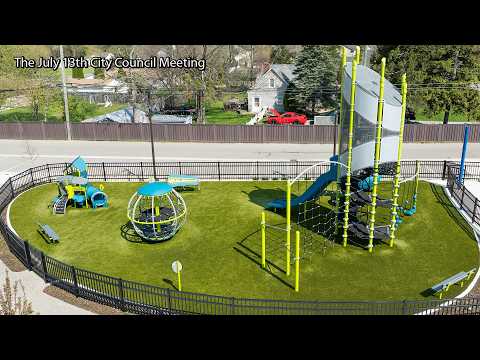
Snyder also reviewed staffing assumptions and capital projects: one new full‑time park ranger, planned playground replacements, parking‑lot work at the museum, and ongoing bridge and road projects in the CIP. He noted the city’s general fund policy was being phased from an 80% to a 35% target over several years and that fund balances still look strong.
The administration and council agreed the forecast shows a resilient financial position overall but that rising public‑safety costs and reduced state shared revenue create near‑term pressure that warrants monitoring and community discussion before any permanent operating commitments are made.
The council scheduled further budget work this month and will consider updated numbers—if the fire millage passes the August primary the administration expects to update the 3‑year budget package for council after election results are certified.