Get Full Government Meeting Transcripts, Videos, & Alerts Forever!
Get email alerts on the Transportation topic
No spam. Unsubscribe anytime.
TAC criticizes MassDOT’s rotary redesign, urges traffic mitigation and a regional bus route
Summary
The Transportation Advisory Committee told chairs the MassDOT rotary redesign is too narrowly scoped and could worsen crossings; TAC urged synchronized signals, traffic calming and explored joining the Lowell Regional Transit Authority to secure a fixed bus route and related services.
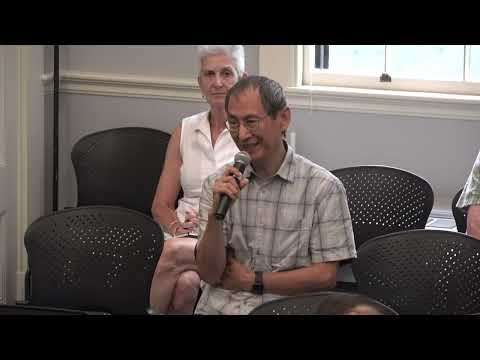
Ellen Quackenbush, chair of the Transportation Advisory Committee, told the chairs’ breakfast that MassDOT’s planned redesign of the Route 2 rotary is a constrained scope that stops at Baker Avenue and ignores traffic flow east of the rotary. She warned the addition of slip lanes and wider crossings could reduce pedestrian safety and urged the town to press MassDOT for traffic mitigation funding and for signal synchronization on approaches such as Baker Avenue and Route 62.
"All that's gonna do is increase the width of the crossing and dramatically reduce safety," Quackenbush said, describing the project as a narrowly focused fix that could create broader safety issues on Elm Street and neighborhood crossings. TAC recommended that a portion of MassDOT funding be used to support local traffic‑calming measures, beacons and speed‑management programs to offset the design impacts.
Quackenbush also summarized a July 7 presentation by the Lowell Regional Transit Authority (LRTA). According to TAC, LRTA described a proposal that would cost roughly $450,000 to establish a Concord fixed bus route, funded in part by shifting a municipal aid or cherry‑sheet allotment; LRTA would own and operate the vehicle, provide drivers and maintenance, and deliver a COA van for senior services. TAC described the bus as a 35‑foot hybrid with about a 22‑month lead time. The LRTA option, TAC said, would require a select board decision and multi‑year community engagement on routes and stops.
TAC further recommended exploring increases to commuter‑rail frequency on the Fitchburg line to reduce car trips, and emphasized coordinating with employers and regional transit providers to build ridership. Quackenbush said some services could be fare‑free for an initial period depending on budget allocations but cautioned ongoing operating costs would need town consideration.
The transportation discussion comes as the town refines broader development plans that will affect traffic patterns; TAC urged integrated mitigation funding and multi‑agency coordination ahead of construction to protect pedestrian safety and town circulation.
The select board and TAC said they will continue engagement with MassDOT, LRTA and regional partners as designs and funding discussions proceed.