Get Full Government Meeting Transcripts, Videos, & Alerts Forever!
Get email alerts on the Livestock Control topic
No spam. Unsubscribe anytime.
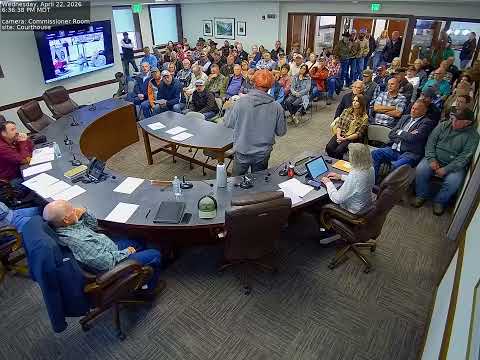
Franklin County commissioners hear split public input on dissolving 12 herd districts and proposed livestock-control ordinance
Summary
At a packed Franklin County public hearing, residents and ranchers split over a proposal to dissolve 12 historic herd districts and replace them with a countywide Livestock Control, Fencing and Enforcement ordinance. Supporters said the current districts are outdated and unenforceable; opponents warned of safety risks and unresolved liability questions.
At a public hearing in Franklin County, commissioners heard several hours of testimony on a plan to dissolve 12 longstanding herd districts and on a draft county ordinance to govern livestock control, fencing and enforcement.
The committee that drafted the proposal recommended replacing the old herd districts with “countywide ordinances that are clear and enforceable,” the committee presenter (identified in the meeting as Bozen) said, arguing the change would give law enforcement and brand inspectors clearer authority and penalties for repeat offenders.
Why it matters: Residents said the change could reduce confusion about enforcement and help prevent repeat trespass by livestock. Opponents said dissolving formal herd districts could revive open-range protections in some areas and leave homeowners and motorists exposed to liability unless the ordinance is clarified.
What presenters said Bozen, presenting the committee’s recommendation, argued many of the current herd districts were created before 1990 and are not functional. “We would recommend replacing all of herd districts in Franklin County with the countywide ordinances that is clear and enforceable, which would contain a clear penalty system for repeat offenders,” he told the commissioners.
The sheriff, invited to comment on the draft, said the ordinance’s purpose is clarification and measured enforcement. “Our intention and my intention as sheriff is not to go out and hammer down on people with livestock,” he said, adding the draft seeks tools to address habitual noncompliance that currently can require private litigation.
Public reactions Supporters — including ranchers and residents who reported repeated trespass and vehicle collisions with livestock — urged commissioners to adopt a county ordinance or otherwise remove dysfunctional herd districts. Scott Langsgaard, a property owner, said the existing districts “are not according to the nineties law” and create confusion; he favored starting over with functioning districts only where neighbors agree to fund fencing.
Opponents and concerned residents described damaged property, repeated trespass and a serious crash. Anne Dusolding read a statement saying, “I have a problem with dissolving these. In fact, open range is not something I want,” and recounted multiple incidents where neighbors’ cattle entered private property and damaged yards and gardens. Another speaker recalled a 2018 crash involving a large stray animal to stress the safety stakes.
Key technical and legal questions Several speakers pressed commissioners on procedural and legal details: one testifier asked whether the county had petitions representing 50 percent of landowners in each district (a point the committee said it had on file but that commissioners asked to see). Others asked how the draft ordinance treats areas bordering federal or state public lands (BLM, forest) and whether the ordinance would effectively preserve or eliminate open-range liability rules in some places.
Draft provisions under scrutiny include the ordinance’s definitions (for example, whether the term “custodian” or “landowner” applies in shared-fence situations), how civil liability will be determined in collisions or crop damage, and whether special rules are needed for properties adjacent to national forest or BLM land.
What happens next Commissioners closed both public hearings after taking testimony, read several written comments into the record, and said they would take the input under advisement. The chair said the commission will not make a final decision immediately, may revise the draft ordinance to clarify definitions and exemptions, and could reconvene another public hearing if changes are substantial.
The hearing record: commissioners opened and closed the public hearings by motion and voice vote and signaled an intention to pursue a revised ordinance that aims to balance motorist safety, property protection and agricultural practices.