Get Full Government Meeting Transcripts, Videos, & Alerts Forever!
Get email alerts on the Right Of Way topic
No spam. Unsubscribe anytime.
Tequesta council adopts first-reading changes to right-of-way rules after extended debate over buffers, plantings and enforcement
Summary
After nearly three hours of discussion on drainage, nonconforming front-yard features, root-barrier requirements and mailbox rules, the council approved edits to the village's right-of-way ordinance and directed staff to refine mailbox and root-barrier language before second reading.
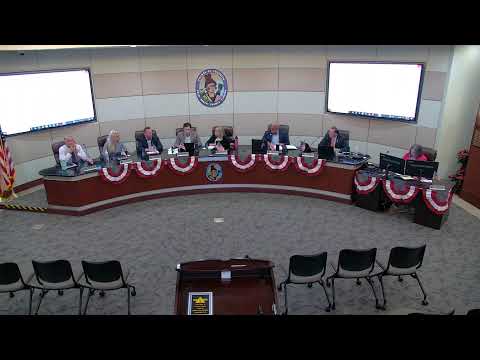
The Village of Tequesta held a lengthy first-reading discussion on July 16 of proposed right-of-way regulations intended to clarify permitting, protect drainage and utilities, and set standards for plantings and other right-of-way features. Staff and councilors debated multiple technical points and directed a small set of edits for second reading.
Public works director Doug Chambers framed the ordinance as a way to protect underground utilities, drainage and sidewalks and to create predictable, consistent standards for permits and maintenance. He explained the code clarifies when a private feature is lawful nonconforming, specifies a three-foot grassy buffer from the road’s edge to preserve the flow line, and requires engineering standards such as root barriers near utilities. Chambers showed photos of tree-root damage to sidewalks and water mains to illustrate the public-cost rationale for the rules.
Council members raised multiple concerns: how the ordinance treats long-standing lawful nonconforming features (rocks, gravel, older plantings), whether staggered plantings in the flow line could create a 'wall' that impedes drainage, and the village's discretion for enforcement. Several members recommended softer language for mailbox decorative features, urging the code defer to United States Postal Service requirements rather than an exhaustive list of prohibited decorations.
Council agreed to three specific edits between first and second reading: (1) remove the strict mailbox-decorative-feature prohibition and instead require USPS compliance or village approval for unique designs; (2) change the 'flat area' requirement for plantings to 'reasonably flat' for practical flexibility; and (3) allow staff discretion to waive root-barrier installation where justified rather than rely on a rigid physical-constraint clause. Staff confirmed those changes can be made before second reading. The council advanced the ordinance with those edits and directed continued public education about the rules.
Supporters on council emphasized the ordinance's goal of protecting long-term infrastructure and ensuring access for future undergrounding and maintenance projects; opponents worried the code could be overly prescriptive and reduce neighborhood character if wording is not clarified. Staff plans further edits and outreach prior to the second reading.