Get Full Government Meeting Transcripts, Videos, & Alerts Forever!
Get email alerts on the Utility Sale topic
No spam. Unsubscribe anytime.
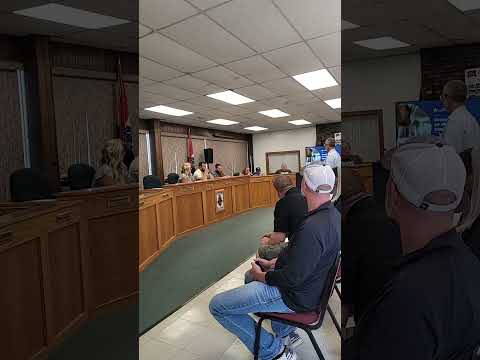
American Water offers acquisition option; Eldon residents and council debate costs, control and chlorination
Summary
American Water representatives presented technical capacity, examples of acquisitions and financing options; councilors and residents said more due diligence is needed amid concerns about higher rates, loss of local control and treatment choices such as chlorination.
American Water representatives led by Matt Nolker, director of business development, presented their company's experience running municipal water systems and described an acquisition process the firm said would include a needs assessment, appraisal(s), due diligence and, ultimately, state regulatory review and a public vote.
"We're the largest water and sewer utility in the United States," Nolker said, and described recent community partnerships and examples where the company said it could invest in aging infrastructure, replace service lines and provide employee transition options. He and colleagues said one potential benefit is the ability to spread capital investments over a much larger customer base than a small town can support alone.
Nut graf: The presentation prompted a prolonged debate about tradeoffs. Supporters said private operators can bring technical capacity, grant funds and faster capital projects; critics warned that privatization can increase rates, erode local control and leave residents vulnerable if a private owner later sells the system. Council members repeatedly said the council must commission due diligence and give the public more information before deciding whether to pursue the option further.
Key facts and process explained: American Water said the state process for a sale typically involves three appraisals (city, company, Public Service Commission), negotiations on an asset purchase agreement, governing‑body review and a public referendum, followed by Public Service Commission approval for regulatory matters including rate setting. Nolker and his team outlined examples of grants and community investments the company has made in other towns and said employee transition arrangements are commonly negotiated.
Community concerns and questions: Residents pressed on rate impacts and treatment choices (several speakers objected to ongoing chlorination). One council member said rates in nearby larger systems can be "about 70 something dollars a month for water" and cautioned that Eldon's current rates are lower; others said even modest increases could be unaffordable for households on fixed incomes. A developer and other audience members raised questions about the 25% rebate to builders and the possibility that a private buyer could later be sold to another company with different priorities.
Council reaction and next steps: Several council members said they opposed making a near‑term decision and instead urged a study or due‑diligence phase, including a transparent information campaign for residents. The council did not authorize an immediate sale; members suggested staff obtain more data, run financial scenarios, and compare options for in‑house capital projects versus partnering or selling.
What happens next: American Water said it is willing to collect additional system information and return with more specific financial and operational proposals if the council requests that work. Council members signaled they want to see an independent study and public outreach before any binding decision or referendum is considered.