Get Full Government Meeting Transcripts, Videos, & Alerts Forever!
Get email alerts on the Bear Conflict topic
No spam. Unsubscribe anytime.
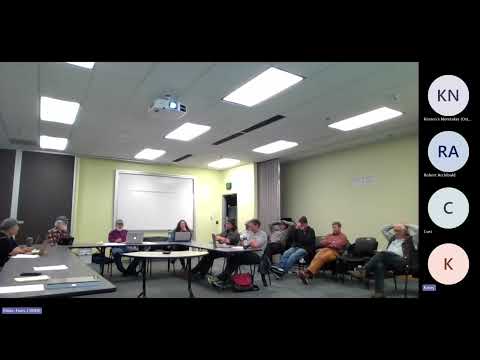
Advisory board to form task force after spike in brown-bear encounters
Summary
After public reports of repeated brown-bear encounters around Humpty Creek, Kachemak Bay State Park staff and advisory-board members agreed to form an ad-hoc task force to develop signage, education and possible localized closures ahead of the 2026 season.
Kachemak Bay State Park advisory-board members agreed to set up an ad-hoc task force after multiple public comments and staff reports about increasing brown-bear activity near Humpty Creek.
At public comment, a resident described several serious incidents in a small area around Humpty Creek and urged temporary closures: “The best solution that I see is to close the entire Humpy Creek area from roughly the end of July through, say, Labor Day,” the speaker said. Board members and park staff repeatedly returned to public education and durable signage as the immediate priorities.
Jason, a state parks staff member who briefed the board, told members that brown-bear activity in the park has increased since about 2005 and that interactions are concentrated near the bridge and upstream toward a private cabin: “The number one thing I would get is education,” he said, urging coordinated outreach through water-taxi operators, trailhead kiosks and laminated handouts for transporters and visitor hubs.
Board members and volunteers cited past outreach materials—single-sheet etiquette handouts and an existing but fragile kiosk—and suggested more permanent solutions such as a pavilion video, durable trailhead signs and collated materials for water taxis. A Friends group representative said volunteers have cleared miles of trail this year and could assist with content distribution and kiosk maintenance.
At about SEG 2601 the board member who proposed the task force moved that an ad-hoc committee be established to develop recommendations on signage, education, outreach and, if needed, temporary closures. The motion was seconded and members agreed to begin work by email and bring recommendations to a future meeting; no formal roll-call vote was recorded.
The task force will be charged with assembling stakeholders—state parks staff, Friends volunteers, water-taxi operators and others—to propose near-term steps (signs and handouts) and longer-term options (micro-closures, kiosks, and outreach campaigns) before the next season. The board emphasized it is not authorizing closures immediately but wants a plan in place so responses can be timed and targeted.
Next steps: staff will coordinate an initial email thread, Friends representatives will collate existing materials, and the board will place the item on a future agenda for review of draft recommendations.