Get Full Government Meeting Transcripts, Videos, & Alerts Forever!
Get email alerts on the Mobile Food Vendors topic
No spam. Unsubscribe anytime.
Shelton study session asks staff to craft clearer rules for food trucks, pop‑ups and vendor courts
Summary
City staff briefed the council on overlapping state and local rules for mobile food vendors and recommended clearer definitions and code changes. Council and operators flagged commissary kitchens, grease disposal, parking and sidewalk vending; staff were directed to draft options for zones, spacing and coordination with L&I, Health and Fire.
Shelton’s City Council spent its July 14 study session reviewing how the city should regulate mobile food vendors, food trucks, pop‑ups and multi‑vendor food courts and asked staff to return with draft code options for definitions, zoning and operational limits.
Staff presentation first outlined the regulatory framework staff said governs mobile food establishments: Washington State food‑safety rules administered by the county health department, Department of Labor and Industries (L&I) plan review and an increasing role for fire code standards. "I basically asked Google AI the question, what do I need to do to legally operate a mobile mobile food vending unit in Shelton, Washington?" said Aaron Nicks, the community economic development director, describing steps and agencies involved and noting that Shelton’s local code has not been substantially updated since 2015.
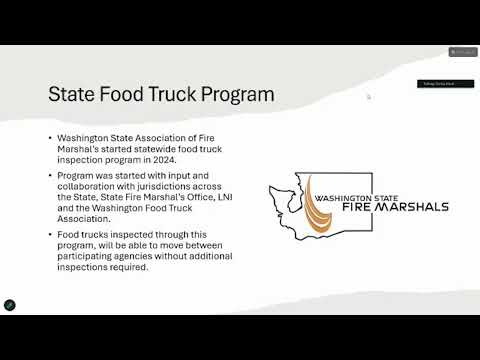
Fire Marshal Keith Reeds told the council the state added mobile‑preparation‑vehicle language to the fire code in 2021 and that applicable NFPA standards (for example, NFPA 96 for grease‑laden cooking) apply on a case‑by‑case basis. He described a new multi‑jurisdiction inspection program intended to reduce duplicate inspections when a truck carries an L&I insignia.
Planning and building staff emphasized two recurring city concerns: (1) units that remain "readily movable" versus those made effectively permanent by seating, canopies or built structures, and (2) grease‑dumping and commissary kitchens that the county health department may approve without corresponding city occupancy or building permits. Senior planner Jason Dose said the city looks first at whether a proposed unit is sited in a zone that allows restaurant uses and whether a vehicle carries L&I approval.
Council members and members of the public asked detailed operational questions. Staff confirmed that some carts and pop‑ups are exempt from L&I vehicle plan review but remain subject to county health rules, and that temporary special‑event permits can be used for one‑day operations while the code is updated. Councilmembers raised hours of operation and minimum distances from residences, and asked staff to consider a downtown or other zone where food courts and more liberal hours could be allowed.
Several vendors who spoke during public comment described complying with county permit conditions (on‑site handwashing, gray‑water containment, bleach buckets, vents, fire‑resistant materials and extinguishers) and requested clearer city guidance. One operator who spoke at length said the local food truck court had produced significant retail activity, asserting "when we were at full tilt, when we had 5, 6 food trucks, we were generating $1,200,000 in sales per year." That economic point was presented as operator testimony in support of streamlined local rules rather than as a verified city revenue figure.
Repeated concerns from vendors and council members included how to: (a) allow limited or conditional occupancy for commissary access without creating permanent occupancy liabilities; (b) require proper grease interceptors and disposal; (c) set spacing and site‑layout standards for food courts; and (d) avoid unintentionally shifting parking burdens to adjacent private property or to the city.
Council did not take any vote. Instead, members gave staff direction to draft clearer, common definitions (food truck/commercial coach, mobile food vending unit/pop‑up/cart, and mobile food court), to prepare options for: allowable zones, spacing and maximums for courts, hours of operation, sidewalk vending permit language that protects ADA access and sightlines, and parking implications. Staff were also asked to coordinate proposed language with the county health department, the state L&I guidance, and the fire marshal’s office and to present model ordinance language and code options at a future meeting.
The session closed with the council thanking presenters and members of the public for detailed comments; no formal vote or ordinance was adopted in the meeting.