Get Full Government Meeting Transcripts, Videos, & Alerts Forever!
Get email alerts on the Police Accountability topic
No spam. Unsubscribe anytime.
Vallejo leaders, families press POST for clarity on ‘badge bending’ complaints and SB2 retroactivity
Summary
Vallejo’s mayor, impacted families and civil-rights attorneys urged the Commission on Peace Officer Standards and Training to provide status updates and timelines on complaints tied to alleged ‘badge bending’ and to clarify which historical incidents SB2 allows POST to review.
Andrea Sorse, mayor of Vallejo, told the Commission on Peace Officer Standards and Training that families in her city have repeatedly sought clarity about investigations into long‑running allegations of officer misconduct and “badge bending,” and she asked POST to confirm the status of complaints and provide an expected timeline for action.
The request came during public comment, when Sorse said the city had abdicated accountability years ago and that families and advocates have filed complaints to POST to seek decertification where local accountability failed. “We rely on POST,” Sorse said. “I’m asking respectfully for a status update and a timeline with which we can expect follow‑up.”
Why it matters: The board is grappling with the limits of recent legislation—commonly referred to in the meeting as SB 2—on which older misconduct it may review and whether some incidents reported by community members will be considered retroactive and thus ineligible for POST action. Without clarity, families and local advocates said they cannot tell whether further legal or legislative remedies are needed.
Several family members and advocates detailed decades of harm they say resulted from Vallejo Police Department practices. Corey McCoy, whose brother Willie McCoy was shot in 2019, told the board the alleged misconduct has left families “cautiously waiting to see any semblance of fairness, transparency or accountability.” Chris Kelly, whose brother was shot in 2012, said her family and others have exhausted available avenues and argued that badge bending and coordinated concealment are documented, not rumor.
Civil‑rights attorney Melissa Nold told the board she had compiled records, transcripts and witness statements she described as evidence that some officers were unqualified when hired and that disciplinary records were obscured; she offered to provide the materials and witnesses to POST staff.
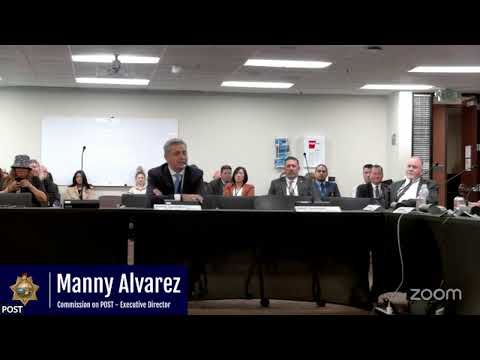
POST staff acknowledged limits in what they can address and said the division is tracking cases submitted by the ACLU and families. Assistant executive director Anne Marie Delmagado told the board that some reports are designated as retroactive under the statutory construction and that POST can act only on certain categories of serious misconduct for incidents before the statutory start date. Delmagado said staff would meet with Vallejo representatives to review which of the nine cases referenced by speakers might be actionable and would provide additional status information to requesters.
Board members and staff discussed ways to give the public clearer information about POST’s role and limitations. Members suggested a simple handout describing what POST does and does not do, and staff said the agency can and does provide public data about retroactive versus post‑statute reports. Delmagado also described POST’s efforts to monitor media reports and to cross‑check them against the agency’s complaint database to find incidents that might not otherwise be reported.
What’s next: POST staff agreed to follow up with Vallejo representatives to clarify which submissions are in POST’s pipeline and which incidents fall outside the law’s retroactive reach. The board also scheduled a session later in the meeting to review statistical data on retroactive cases and public complaints.