Get Full Government Meeting Transcripts, Videos, & Alerts Forever!
Get email alerts on the Emergency Services Capacity topic
No spam. Unsubscribe anytime.
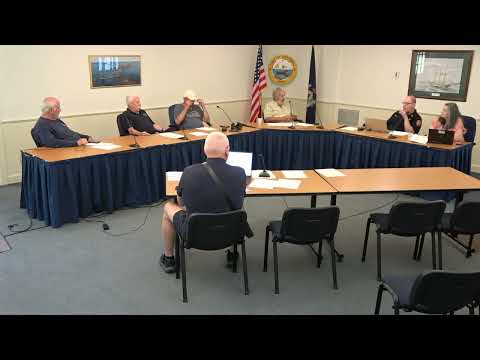
Harpswell committee says volunteer system is strained; debates 24/7 staffing, mutual aid and hydrants
Summary
Committee members and volunteer firefighters described persistent staffing gaps, certification delays and a recent dispatch error, and discussed options ranging from expanded mutual aid and hydrants to a 24/7 full-time model that could cost more than $2 million.
Committee members and volunteer firefighters told a local advisory meeting that Harpswell’s mostly volunteer emergency response system is under strain and discussed a range of responses — from expanded mutual-aid agreements to a possible move to full-time 24/7 staffing that speakers said could exceed $2 million in annual costs.
“Eventually, it's gonna take the whole system down,” one committee member said, warning that multiple weak stations and uneven mutual-aid responses risked broader failures. Members described a patchwork system in which some island stations have seen rosters fall from the low 30s to about 22 and several crews lack certified interior firefighters.
The committee’s chief said six volunteers who completed training in June remain unable to enter burning buildings because certification paperwork has not been issued and filed. “I will not let them go interior until I have the paperwork,” the chief said, explaining the decision is intended to limit liability and ensure safe, certified staffing on structure fires.
Participants reviewed a recent incident in which dispatch tones initially described a shed fire but the call later proved to be a large structure — a misclassification that several speakers said delayed correct apparatus and complicated the early response. A responder at the scene said dispatch did not include the fire department in the first set of tones and that corrections came only after personnel on scene raised the alarm.
Speakers discussed mutual-aid mechanics and apparatus availability. Tank 7, a local tanker, was reported in the shop during the recent call, leaving limited tanker capacity until mutual-aid tankers could arrive. Committee members and firefighters said the town’s reliance on mutual-aid partners such as Brunswick and neighboring departments is useful but inconsistent; one participant urged exploring expanded agreements with West Bath and other nearby departments to increase personnel and tanker resources.
Water supply and infrastructure were also raised. Members described a 30,000-gallon cistern that had been used on a prior fire and recounted a historical saltwater pressurized system that once provided suppression capability. Several speakers said installing more hydrants remains a priority to reduce dependence on tanker operations.
The committee discussed long-term options, including consolidation models and a centralized emergency-services building with an administrator. Committee members asked the chief to circulate two consolidation studies to the group for review; the chief agreed to distribute the materials and the group said reading the reports would aid future deliberations. “I think it'd be helpful if you read them first,” one member said.
Cost was a central concern. A participant said preliminary planning suggested budgets “over $2,000,000” for a full-time 24/7 model, and members faulted a lack of clear town expectations and ordinance alignment as complicating potential transitions. Participants noted the coming budget cycle deadline in September as the next procedural milestone for any staffing proposal.
At the close of the meeting the committee moved to approve the minutes as written; a member moved, another seconded and the chair called the question. Two attendees raised hands in opposition during the vote; the transcript does not record a final numerical tally.
Next steps: the chief will circulate the consolidation studies, members said they will review them and the committee expects further discussion before any formal recommendation is sent to the select board or before budget decisions in September.