Get Full Government Meeting Transcripts, Videos, & Alerts Forever!
Get email alerts on the Supply Chain Security topic
No spam. Unsubscribe anytime.
Committee member says U.S. must end dependence on China for chips, critical minerals and energy
Summary
A committee member opened a hearing saying the United States "cannot remain dependent on China on any front," urged better coordination of DFC, USTDA and MCC to secure supply chains for AI and critical minerals, and noted the committee had unanimously passed the Bipartisan Dominance Act through the House Foreign Affairs Committee.
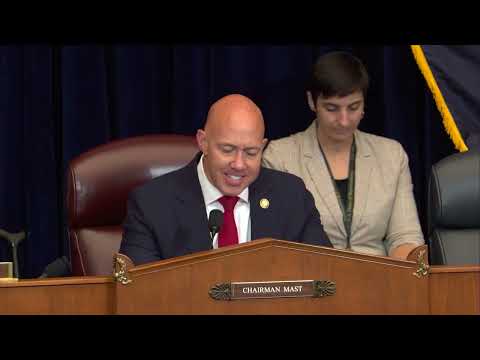
A committee member opened a House Foreign Affairs Committee hearing saying the United States "cannot remain dependent on China on any front," and urged faster, more coordinated use of the U.S. agencies that finance and shape overseas projects.
The speaker said U.S. dependencies on adversaries for "materials, technologies, energy, and infrastructure that power our economy" pose strategic risks and that Congress and the administration must act to secure supply chains. "The United States cannot remain dependent on China on any front," the committee member said.
The hearing highlighted three federal agencies the speaker called "our most important tools of economic statecraft": the U.S. International Development Finance Corporation (DFC), the U.S. Trade and Development Agency (USTDA), and the Millennium Challenge Corporation (MCC). The speaker said each has a distinct role: "USTDA helped shape projects early on; DFC mobilized capital and moves investments forward; and MCC helps build the infrastructure, institutions, and enabling conditions that allow those investments to succeed."
On technology and minerals, the speaker argued that U.S. leadership in artificial intelligence requires more than software, pointing to chips, minerals, reliable energy, data centers and secure telecommunications. "AI leadership depends on more than software," the committee member said, adding that critical minerals underpin weapons systems, advanced manufacturing and energy infrastructure.
The speaker also accused the Chinese Communist Party of deliberately building control over mines, processing, ports and logistics to gain leverage over the United States and its allies. The remarks placed the committee's work in the context of broader administration policy: the speaker said President Trump's agenda treats economic security as national security and seeks "energy dominance, secure critical mineral supplies, stronger American industry, and U.S. leadership in technologies of the future."
The committee member noted the panel had already "passed the Bipartisan Dominance Act unanimously through the House Foreign Affairs Committee," and said the current opportunity is to make existing tools "work better together, faster, more efficiently, and with clear results for the American people." The transcript does not record a vote at this hearing or additional legislative action; it records the speaker's opening remarks.
The hearing set the stage for questions and testimony focused on how DFC, USTDA and MCC might be better coordinated to reduce reliance on adversaries for critical inputs and infrastructure.