Get Full Government Meeting Transcripts, Videos, & Alerts Forever!
Get email alerts on the Public Comment Historical Preservation topic
No spam. Unsubscribe anytime.
Pastor urges Indio arts panel to remember displaced neighborhood, criticizes developer
Summary
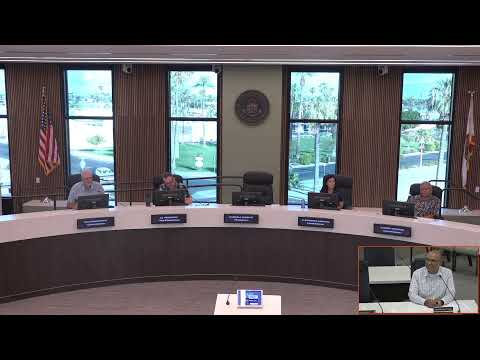
At the July 14 Indio Public Arts Commission meeting, Pastor Carl McPeters urged commissioners to preserve the history of a displaced neighborhood and criticized a private developer he named as "Mr. Hagan," saying past city decisions left long-term harm for residents.
Pastor Carl McPeters told the Indio Public Arts Commission on July 14 that redevelopment decisions dating to the early 1990s erased a neighborhood that once housed "2 or 3,000 people," disproportionately Black and brown residents, and deprived the community of long-term gains.
McPeters, who identified himself as a longtime local pastor and resident, said he began pastoring in the valley in 1989 and later founded Caracas Christian Center. He said the city’s earlier plans for a mall and related redevelopment failed to deliver promised benefits to residents and instead led to loss of neighborhood history.
"If we lose our history ... it was lost in 1993 when the council at that time made a decision," McPeters said, urging the commission to recall how redevelopment choices affected families and businesses. He characterized the outcome as a missed opportunity that left some residents hurting.
McPeters also criticized a private developer he named as "Mr. Hagan," saying attempts to work with him had failed. "That man is not a ... godly man," McPeters said. "He's not a good man. He's not good for this city." The comment was made during the public-comment period; commissioners did not offer a formal response during the meeting.
McPeters closed by giving his name and local address for the record and asking commissioners to consider residents harmed by past actions when making future decisions.
The commission took no formal action in response to the remarks; the item was a public comment that the panel heard before proceeding to its agenda. The meeting proceeded to staff reports and routine business, including approval of the April 14 minutes.