Get Full Government Meeting Transcripts, Videos, & Alerts Forever!
Get email alerts on the Community Needs Assessment topic
No spam. Unsubscribe anytime.
Princeton needs assessment finds food, health care, housing and transportation top gaps; recommends navigators and outreach
Summary
A new Princeton Community Needs Assessment surveyed 253 lower-income households and found persistent food insecurity and barriers to health care, housing stability and transportation; authors recommend community navigators, expanded outreach and centralized multilingual resources.
Sabuhi Ashir of Firefly Community Research presented findings from the Princeton Community Needs Assessment 2025, saying the work ‘‘offers a direct window into the experiences and priorities of the community’s most underserved residents.’’ The presentation drew on a purposive digital survey of 253 low- and moderate-income households (representing 521 adults and 280 children), listening sessions in English and Spanish, and a supplemental older‑adult sample for the age‑friendly task force.
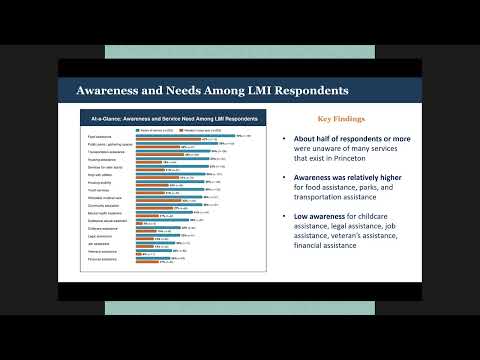
The assessment found food assistance and transportation were the most commonly reported needs. Ashir said 47% of respondents used food assistance in the past year and 43% worried food would run out; among assistance users, more than two‑thirds accessed pantries or programs at least monthly. Meal skipping fell from about 40% in 2014 to 23% in the current sample, but food assistance use increased from 35% to 47%.
Health care barriers were pronounced: nearly 30% of respondents postponed or skipped medical or dental care because of cost, and 25% were unable to pay a medical or dental bill in the past year. Coverage skewed toward public programs—about 43% of insured respondents were on Medicaid, New Jersey FamilyCare or Medicare—so Ashir noted that changes to federal eligibility rules could affect local access. Transportation to appointments was a recurring barrier.
Housing instability was concentrated among renters: Ashir reported 84% of survey respondents rent and nearly half live in subsidized or affordable housing. For households that experienced instability, medical problems were the leading factor (11%). Residents described fragmented application processes, escalating fees (parking, water, trash, technology), and the need for trusted, on-site navigators who can help with paperwork and connect households to services.
On employment and income, about 38% of respondents were working for pay, 30% retired, roughly 10% unemployed and 12% looking for work; a subset reported a mean monthly income of a little over $2,000. Ashir highlighted a recurring ‘‘missing middle’’ problem: households that earn too much to qualify for assistance but not enough to afford local costs.
Equity and digital access also emerged as priorities. Ashir said 26% of respondents lacked reliable home Internet (about a third for younger respondents) and many participants requested technology education. Measures of belonging varied: while a majority reported feeling connected to neighbors and groups, 16% felt disconnected and smaller shares said Princeton felt welcoming to immigrants and people with disabilities.
The assessment included a focused older‑adult sample (162 respondents, about 70% lower income and roughly two‑thirds reporting a disability). For older residents, transportation was the top need; requests included same‑day booking, evening and weekend service and multi‑stop flexibility. Around 30% of older adults reported skipping or delaying care because of cost.
Based on these findings, the presenters recommended four priority strategies: strengthen community coordination and navigation (including community navigators who meet residents where they are); expand outreach and access (mobile clinics, on‑site navigation, a centralized multilingual services directory); improve transportation options and scheduling; and pursue affordability measures including digital access, financial literacy programs, community solar, ADUs and home‑share models. ‘‘The service system is hard for them to navigate on their own,’’ Ashir said, summarizing residents’ repeated feedback.
Ro, a municipal human services representative who opened and closed the session, said the report and presentation will be shared with partners and that staff will begin strategic implementation and partner outreach. She provided humanservices@princetonnj.gov for follow‑up and thanked residents and community partners for their participation.
The assessment team emphasized that the survey was purposive—designed to reach lower‑income residents—and therefore offers a detailed view of underserved households rather than a fully representative townwide estimate. Next steps include sharing the full report, collaborating with municipal and nonprofit partners on implementation, and building the recommended navigation and outreach tools.