Get Full Government Meeting Transcripts, Videos, & Alerts Forever!
Get email alerts on the Veterans And Public Safety topic
No spam. Unsubscribe anytime.
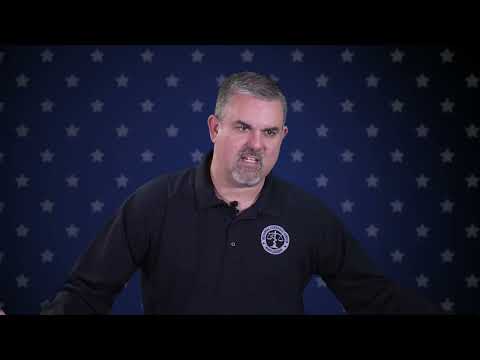
Chris Thomas, Regional Forensic Center administrator, reflects on Iraq deployment and supporting trauma-exposed staff
Summary
Chris Thomas, an administrator at the Regional Forensic Center, recounted joining the Army after a period of homelessness, serving in Iraq in 2004 where roadside bombs and the death of an EOD technician left lasting impact, and how those experiences shape his work supporting investigators and technicians.
Chris Thomas, who has served in an administrative role at the Regional Forensic Center since 2019, described how his decade in uniform and combat deployments inform his current work supporting staff who routinely encounter traumatic scenes.
Thomas said he joined the military "out of necessity," recalling that he was "pretty much, homeless" during his senior year of high school and enlisted when he turned 18 to find direction. He told listeners he entered the Army National Guard in 1996, trained for years and used the GI Bill to continue his education.
The most consequential chapter of Thomas's service came after a 2004 mobilization. He described a 26-hour journey to Kuwait and subsequent operations in northern Iraq, where his unit's mission included stabilizing the region and protecting a national election. "There were individuals that didn't like that," he said, describing attacks near polling places: "They would throw RPGs or they would throw in different type of mortar rounds trying to make explosions. People would scatter. And as soon as the dust cleared, they get right back in line and finish voting."
Thomas recounted working security with EOD teams confronting roadside bombs and improvised explosive devices. He described the standard procedure — setting a perimeter while technicians used robots to investigate devices — and the toll that work exacts. He named an EOD technician, Eric Stephanie, who was killed when a secondary device detonated while attempting to disarm a bomb. Thomas said Stephanie was "from California" and "had 5 kids."
He also described a close call in which a vehicle shake broke an 80-pound mount that struck him, knocking out a tooth and rendering him briefly unconscious. "I was knocked out on a convoy," Thomas said. He recalled seeing medical care only two days after the incident.
Thomas left active service after 2005 to focus on family. He said he remains proud of his service but carries survivor's guilt. He described a civilian moment in a Walgreens line that highlighted the contrast between wartime hardship and everyday complaints: after waiting briefly, a fellow shopper complained about a four-minute delay, and Thomas reflected on how much Americans take for granted. "It taught me respect for what I have," he said.
Thomas told listeners that his military experiences — the losses, the close calls and the duty to protect others — inform his work at the Regional Forensic Center, where he said his role is to "help [staff] with the resources and the tools they need so that we can make a difference." He said the community has become more aware of and respectful toward investigators, technicians and medical staff in recent years.
No formal actions, votes, or statutory references were recorded in the discussion. The account is a personal testimony about service, trauma and the transition to a civilian leadership role.