Get Full Government Meeting Transcripts, Videos, & Alerts Forever!
Get email alerts on the Municipal Fees topic
No spam. Unsubscribe anytime.
Council work session narrows FY27 fee changes; parking rules, boat impounds and refuse rates get attention
Summary
At a April 13 work session, staff presented the draft FY27 fee schedule and heard council debate parking rules and rates for the Uplands ("Jacklop/Jackloff") lot, tighter enforcement on derelict boats after recent impounds, and a modest refuse fee increase; staff will revise the draft for introduction in May.
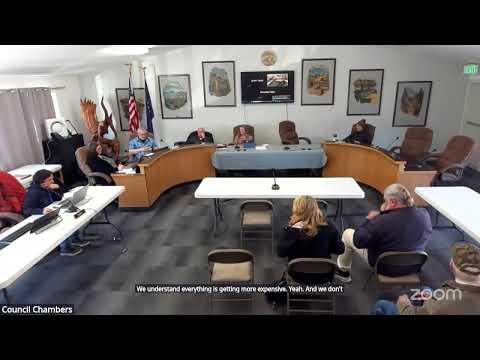
Philadelphia City Council met in a work session on Monday to review the draft fiscal‑year 2027 fee schedule, with discussion centered on new parking rules and rates for the Uplands lot, boat‑storage enforcement and a possible small increase to refuse service charges.
City staff told the council the overall package is light on changes: across most Harbor, boatyard storage and water/sewer lines the draft applies a 1.5% CPI adjustment, and staff proposed a 4% increase to the harbor electric base rate (from $25 to $26) alongside a larger daily moorage charge aimed at short‑term users. The presenter said the boat launch ramp language is limited to trailer‑launched vessels and that the packet includes clarified payment and liability language for new parking options.
On parking at the Uplands lot (referred to in the meeting transcript variously as "Jacklop," "Jackloff" or similar), staff offered multiple options: a short, free window for local, short‑term use; a $5 daily option; a monthly pass; and an annual pass. "We assume no liability and that it's first‑come, first‑serve and there's no reservations," staff said, adding that vehicles must be operational, registered and maintained to avoid creating an abandoned‑vehicle problem. Staff also confirmed payment could be made at the harbor or city office and by phone, and that Harbor Master Leila would help with on‑site monitoring.
Council members pressed for language and rate choices that would deter long‑term storage of trailers and derelict vehicles. Several members said a $20 monthly fee seemed too low and would incentivize year‑round storage; others proposed limits on consecutive days and stall designations for trailers. A number of councilors favored a 3‑day free period for short trips, a $30 monthly pass and an annual pass higher than the draft $50 figure. One member suggested, "You could do a 100 for an annual," while others noted that $50 would be cheaper than comparable regional rates.
On enforcement, councilors coalesced around tighter movement rules: staff recommended, and the council discussed, a requirement that vehicles move at least once every 30 days for annual pass holders and shorter maximum consecutive windows for free parking. Members supported giving the harbor master discretion for one‑off exceptions and suggested visible permits or stickers for annual pass holders to simplify on‑site checks.
Boatyard management and delinquency were key operational concerns. Staff said annual customers make up about 55% of users and have a roughly 11% delinquency rate, while nonannual accounts show about a 30% delinquency rate. "We impounded four last year, sold one for minimal, and ended up destroying three," staff said, noting impound and disposal carry substantial costs and that the city often cannot fully recover legal and handling expenses. Councilors urged more proactive impound/collection work and clearer legal language to limit long‑standing derelict boats.
Refuse service also drew brief discussion. Staff reported roughly a dozen regular refuse customers and about $14,000 in annual revenue for the service and proposed a modest 1.5% adjustment to help cover employee costs and truck fuel. Councilors generally supported a small increase with proactive outreach noting how long rates had been unchanged.
No formal votes were taken; staff said it would update the packet to reflect council guidance (including a likely $30 monthly pass, a multi‑day grace period for short‑term parking, 30‑day movement requirements, and clearer enforcement/impound language) and prepare the revised fee schedule for introduction at the council's first meeting in May. The work session adjourned with the packet revisions slated for return to the council for formal consideration.
Reporting note: Quotations and paraphrases come from the April 13 work session transcript. The transcript uses multiple spellings for the Uplands lot; the article cites the lot generically as "Uplands" and notes the transcript variants in context.