Get Full Government Meeting Transcripts, Videos, & Alerts Forever!
Get email alerts on the Zoning R2 topic
No spam. Unsubscribe anytime.
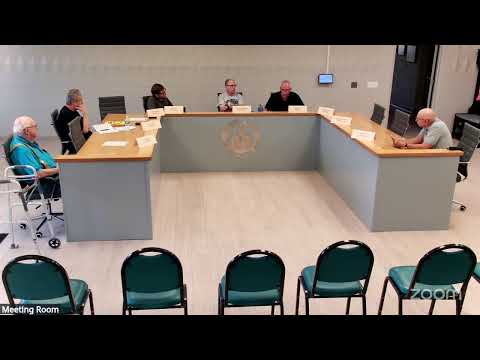
Planning commission votes to place R-2 zoning rewrite for Parkview on next agenda
Summary
The Knox Planning Commission agreed July 14 to discuss proposed R-2 zoning changes at its next meeting. Officials said reducing lot-width and setback requirements — and lowering minimum house size — could unlock state grants to repair Parkview infrastructure; commissioners requested more detail.
The Knox Planning Commission voted to place proposed changes to R-2 zoning in the Parkview neighborhood on the commission's next meeting agenda, beginning a formal review of narrower lot requirements and smaller minimum house sizes intended to encourage infill housing and qualify the city for state infrastructure grants.
Agency official summarized the proposal, saying the state measure that took effect July 1 (referred to in the meeting as “1005”) ties grant and low-interest-loan eligibility to local compliance with certain relaxed building regulations. The official told commissioners “the city can get loans, future grants for infrastructure and that sort of stuff if we comply with several building regulations, including relaxing some of the zoning requirements.”
Why it matters: Commissioners said Parkview has many substandard utilities and aging road and sewer infrastructure; officials argued that modest reductions in lot width and setbacks would make marginal lots buildable and could unlock funds for upgrades. The agency official proposed reducing lot frontage in R-2 from 80 feet to 44 feet, shortening front-yard setbacks from 35 to 20 feet in R-2 only, and lowering a single-family minimum house size from 1,000 to about 800 square feet while keeping duplex minimums at 750 square feet.
Members pressed for details about trade-offs. One commissioner cautioned, “There is no such thing as free money, and we should never ever ever use that terminology,” stressing that state grants ultimately require local matching and impose other obligations. Other commissioners raised concerns about parking, narrow one-way streets in Parkview’s 100 block, and whether sewer and water lines could support added density.
The commission resolved to move the R-2 ordinance onto the next agenda so members could review exact draft language, plots and infrastructure cost estimates, and to consider whether proposed changes should be limited to Parkview as a pilot. The motion to add the R-2 ordinance to the next meeting agenda passed by voice vote with no recorded opposition.
Next steps: Staff was asked to prepare a written draft of the R-2 changes, include parcel measurements and infrastructure impact notes, and to produce any relevant grant-eligibility citations for the commission’s review at the next meeting.