Get Full Government Meeting Transcripts, Videos, & Alerts Forever!
Get email alerts on the Air Quality topic
No spam. Unsubscribe anytime.
Stony Brook Southampton chief warns wildfire smoke, PM2.5 may trigger asthma and COPD attacks
Summary
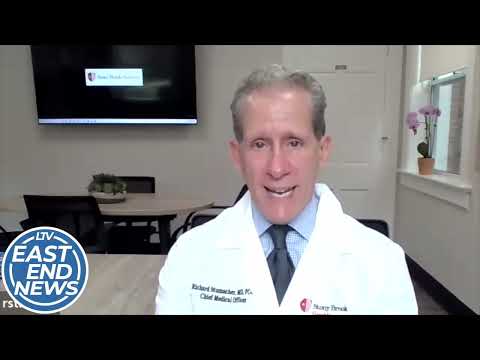
Dr. Richard Stumacher, chief medical officer at Stony Brook Southampton Hospital, warned that smoke from Canadian wildfires has raised PM2.5 levels in the region over the past few days and advised at-risk people to stay indoors, use air conditioning on recirculate or wear an N95, and call their doctor if symptoms worsen.
Dr. Richard Stumacher, chief medical officer at Stony Brook Southampton Hospital, said smoke from Canadian wildfires has blown into the New York region over the last couple of days and contains fine particulate matter known as PM2.5 that can harm respiratory and medically vulnerable patients.
"It's essentially just a much larger version of what you'd see at a fireplace," Stumacher said, describing the plume and its behavior as it travels into the atmosphere and is carried by winds. He warned the particles are small enough to be inhaled and can trigger immune and respiratory reactions.
Healthy people may notice a scratchy or itchy throat, irritated eyes or a mild cough, Stumacher said, adding that he personally experienced mild eye irritation after about 15 minutes outside. "We're basically all smoking right now," he said, arguing the effect is similar to inhaling smoke from a fire, though with fewer carcinogens than a cigarette.
People with asthma, emphysema, chronic bronchitis, interstitial lung disease or other chronic respiratory conditions "have to pay special attention," Stumacher said, because PM2.5 exposure "can trigger an asthma attack or a COPD attack, and you could be coughing, wheezing, and having some difficulty breathing." He added that cardiac patients and those who are immunosuppressed or medically complex are also at higher risk.
For those at higher risk who must be outdoors, Stumacher recommended using whatever mask is available and said, "if you wanted to know what the correct mask is, it would be an N95 for for this environment." He emphasized prevention over reaction: "better than wearing a mask is to... stay indoors and stay with air conditioning," and he advised setting systems to recirculate rather than draw in outside air when possible.
Stumacher urged people to limit strenuous outdoor activity during heavy smoke days — giving the example of postponing a planned long training run — and to shorten chores such as gardening from an hour to 15–20 minutes if smoke is present. He described the respiratory system's defenses (nose hairs, mucus, cilia and cellular immune responses) and explained that inert particles can still provoke a defense response similar to that triggered by an infection.
If someone feels unwell after smoke exposure, Stumacher said the first step is to go indoors and, if symptoms worsen, call a physician. "If you're getting to a point where it's extreme, then you need to go, seek care in whatever... avenue it is, whether or not it's urgent care or emergency department," he said, while cautioning that mild throat irritation alone does not require an ED visit.
He closed by reminding listeners that Stony Brook Southampton Hospital is available to care for patients who need help during this episode.