Get Full Government Meeting Transcripts, Videos, & Alerts Forever!
Get email alerts on the Pfas Landfills topic
No spam. Unsubscribe anytime.
DEQ outlines statewide landfill PFAS sampling, says bottled water supplied where private wells are impacted
Summary
DEQ reported PFAS sampling from more than 200 permitted landfills and preliminary analysis showing frequent detections of PFOA and PFOS; where private wells may be affected, responsible parties have provided bottled water and DEQ plans long-term monitoring and targeted assessments.
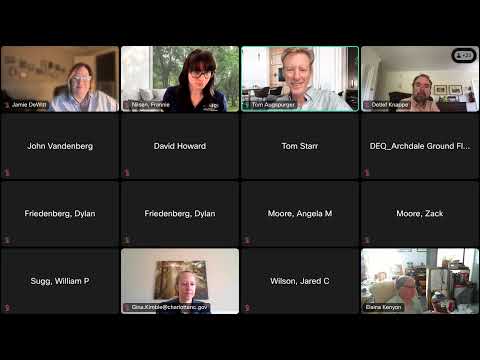
The North Carolina Department of Environmental Quality outlined its statewide program for sampling and assessing PFAS at permitted landfills on the Science Advisory Board's virtual meeting. DEQ solid-waste branch head Perry Sugg said the program now includes sampling from more than 200 permitted landfills and thousands of laboratory results uploaded to the agency database.
DEQ said the sampling effort began in 2023 and used evolving laboratory methods to measure PFAS in groundwater and leachate. "We have our staff of seven hydrogeologists overseeing over 200 permitted landfills," Sugg said, and the program has collected "probably more" than 3,500 samples in the agency database. He said PFOA and PFOS are driving most regulatory actions and that GenX has been detected less frequently.
Why it matters: Board members and staff said these data will inform site-specific risk decisions and possible long-term monitoring. Sugg described a workflow of assessment, confirmation sampling and receptor surveys — including identifying nearby private wells — and said responsible parties provide bottled water when impacts are identified.
Sugg gave examples of ongoing responses: Charlotte Motor Speedway's municipal landfill has provided bottled water to a nearby private well with a possible PFOA detection while the source is evaluated; Kimberly-Clark’s closed industrial landfill is testing nearby wells and considering municipal connections as a longer-term alternative. "If there is [off-site] impact, the responsible party is providing bottled water initially, and then...setting up some kind of alternative water," Sugg said.
Board members questioned how prevalence was reported — whether exceedances were measured per-sample or per-facility — and asked whether precursor compounds such as 5:3 FTCA were included. Sugg said the dataset does include precursor/FTCA compounds and that early samples used different methods, complicating trend analysis. He said exceedances by sample were common enough under low action thresholds to require follow-up but that the number of affected facilities varies by landfill type.
On next steps, DEQ said it expects to continue and expand PFAS assessments, carry out long-term monitoring at many landfills, and coordinate across divisions on leachate treatment, landfill gas systems and other technical responses. Sugg summed up the agency's approach: the work is being folded into existing, risk-based closure and compliance frameworks and will proceed on a site-by-site basis.
Public comment: Heather Hogan, a solid-waste consultant, asked about the state's plans for monitoring and management at landfills. DEQ staff offered to send her the presentation PDFs and noted the full meeting recording and slides would be posted online within about a week.
The board did not take formal regulatory action at the meeting; DEQ staff said they will continue assessments and communicate findings to affected communities and the board.