Get Full Government Meeting Transcripts, Videos, & Alerts Forever!
Get email alerts on the Coastal Erosion Structures topic
No spam. Unsubscribe anytime.
Science panel to CRC drafts outline on hardened coastal structures, targets Feb. 6 packet
Summary
A Coastal Resources Commission science panel agreed to draft an outline assessing the effects of hardened coastal structures — focusing on sand-trapping and shoreline hardening — and to deliver a draft for inclusion in the CRC packet by Feb. 6 ahead of the Feb. 25–26 meeting.
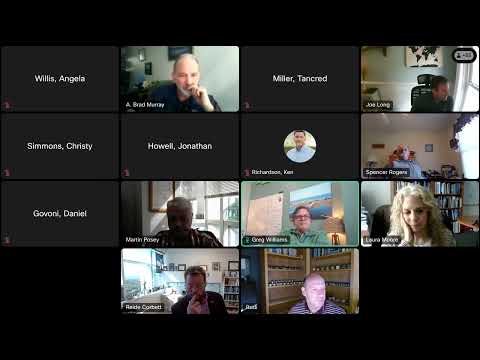
A science panel advising the Coastal Resources Commission agreed on an outline for a report on the effects of hardened coastal structures and set a target of Feb. 6 to provide a draft for the CRC packet, the panel’s moderator Laura said.
The panel — including visiting expert Greg Williams and members with engineering and geology experience — settled on an organizational framework that lists approaches as “add, avoid, plant it, harden, trap” but will concentrate the report on two primary concerns for the CRC: sand-trapping structures (groins, jetties and some breakwaters) and shoreline hardening (seawalls, sandbags and similar revetments). “It would be ideal if we could provide something by February 6 that could go into the CRC packet ahead of their next meeting, which is February 25th and 26th,” Laura said.
Why it matters: panelists said calls to reconsider North Carolina’s restrictions on hard shoreline structures make it timely to restate known trade-offs. Several members emphasized that measures which trap sand to stabilize one reach of shore commonly create increased erosion down-drift. Spencer, who described earlier CRC and panel history, summarized the concern this way: “Wherever they trap is a deficit somewhere else,” and said the report should clearly describe that trade-off.
The panel agreed the report should be simple, evidence-based and practical. Members recommended front-loading an introduction that explains barrier-island dynamics and longshore and cross-shore processes, then describing the intended goals and observed unintended consequences for each class of structure. Panelists repeatedly urged the inclusion of ecological effects: one member whose work focuses on fisheries said the report should “include a request or a plea that they do consider the potential fisheries and other, recreational use effects of the hardened structure.”
Design nuances and novel approaches: the group discussed modern design variations such as “leaky” groins and geotextile tubes (geotubes), and whether those innovations should be treated separately or grouped with traditional categories. Panelists noted that new technologies often fit within the same functional categories and that the report should describe how design permeability modifies, but does not eliminate, trade-offs. Greg Williams and others urged the panel to make clear when structures are intended for navigation or flood control (for example, jetties) rather than erosion control.
Law and policy context: members reviewed the history of the state’s restrictions that are colloquially called “the ban” on certain hardened structures, noting a 2002 legislative change that converted prior commission rules into statute and removed the commission’s ability to grant variances where the statute does not allow them. As Spencer put it, when that change happened “the commission could no longer consider variances to the rule because if it wasn't in the rule already, it was prohibited by law.” The panel resolved not to opine on whether law or rule is the better mechanism, but to provide information the CRC can use if the legal framework is reconsidered.
Work plan and next steps: Laura said she will clean up the outline and circulate it; a panel member volunteered to check the literature for additional techniques and case studies and to share links by the following Tuesday to ensure no widely used approaches are omitted. The panel asked one member to draft a short introductory paragraph on ecological considerations and agreed to mark experimental approaches (for example geochemical dune hardening) as alternatives to be listed and discussed where they fit into existing categories. The panel reiterated that the report should include citations and a concise set of trade-offs for decision makers.
The panel closed by offering to send prior panel reports and relevant CRC materials (including past sandbag and terminal-groin discussions) to avoid duplication and to inform the draft. The panel plans to finalize a draft for the CRC packet by Feb. 6 and to present the work to the commission at its Feb. 25–26 meeting.