Get Full Government Meeting Transcripts, Videos, & Alerts Forever!
Get email alerts on the Transportation Ebikes topic
No spam. Unsubscribe anytime.
Franklin staff roll out draft e‑bike rules; police and residents press for clearer definitions and signage
Summary
City staff presented a draft ordinance defining e‑bike classes and where they may be ridden; Franklin Police rolled out a PSA. Riders and residents urged clearer definitions to distinguish e‑bikes from e‑motos, better signage for multi‑use paths, and a year‑long review of impacts.
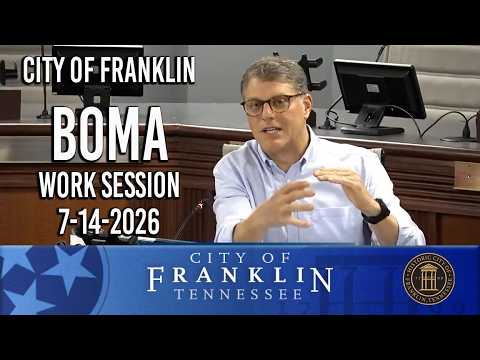
City staff on July 14 presented a working draft of ordinance 20 26‑19 aimed at regulating e‑bikes, e‑scooters and other play vehicles in Franklin, with police and resident speakers urging clearer definitions and better public education.
The presentation described three classes of e‑bikes: classes 1 and 2, which staff said can be allowed on streets and signed multi‑use paths; and class 3, which staff recommended be limited to streets and roadways only. The draft would require riders under 16 to wear helmets on classes 1 and 2, and would require helmets for all class‑3 riders. Staff also discussed distinguishing e‑bikes from e‑motorcycles and following state law for motorcycles and e‑motorcycles.
“Parents just aren’t being told,” a staff presenter said while describing a police PSA and a QR code the department has published to explain vehicle types and rules. Officer Jared Anderson of the Franklin Police Department’s traffic unit said the PSA and QR code explain differences among e‑bikes, motorized bicycles and e‑motos, and reiterated the draft’s baseline rules: class‑1 and class‑2 bikes can use streets and bike paths; class‑3 bikes are street‑only and riders must be at least 16; sidewalks are not allowed for e‑bikes in Franklin.
Two public commenters who identified themselves as e‑bike users urged clarifications. Kathy Faulkner said the ordinance should explicitly incorporate the federal and Tennessee definitions of the three e‑bike classes and make clear that devices that do not meet those definitions should be regulated as e‑motos or motorcycles. “If an e‑bike does not meet the definition of e‑bike, it is considered an e‑moto or mini motorcycle and is regulated under the motorcycle section,” Faulkner said.
Kim Harris, representing the local e‑bike community, told the board many residents rely on e‑bikes for commuting or mobility and cautioned against removing current access to multi‑use paths. “Education is a must,” Harris said, urging the city to ensure riders understand which category their device falls into and where it may be ridden.
Aldermen focused on signage and enforcement. One member asked how staff would communicate that a paved path adjacent to a roadway is a signed multi‑use path where e‑bikes are allowed, rather than a sidewalk where they are not. Staff said they would work with Parks and the communications team on signage and potential pavement treatments. Another alderman asked staff to compile police interaction data on e‑bike calls so the board can see where incidents occur before the ordinance is finalized. Several members supported a review period; one asked that the board revisit the ordinance in about a year to assess effectiveness and unintended consequences.
Staff indicated parts of the draft follow state law and that some enforcement would continue to rely on state citations for motorcycles and e‑motorcycles. The draft also contemplates allowing non‑motorized play vehicles on streets, roadways and sidewalks but would continue to prohibit them inside certain public buildings and parking garages.
Next steps: staff said they will return with clarified ordinance language that cross‑references e‑bike terms throughout the code, propose signage and outreach plans tied to the QR resource, and provide data on past police interactions with e‑bike‑related complaints. The board offered general support for moving forward with public education and asked to see a version that incorporates the federal/Tennessee definitions and clearer cross‑references.