Get email alerts on the Pathways topic
No spam. Unsubscribe anytime.
Long Grove board approves combined phase‑1 engineering study for pathway spine
Summary
Trustees voted to approve combined phase‑1 engineering for the proposed village pathway spine (Aptekisick to Gilmer), authorizing a $291,000 study intended to strengthen federal grant applications (ITEP) and realize cost savings versus two separate studies.
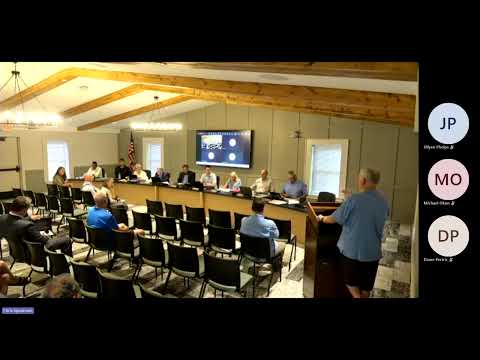
Trustees voted to approve combined phase‑1 feasibility engineering for two pathway segments that would extend Long Grove’s pathway network north from Aptekisick to Gilmer (the red and blue segments on staff maps). The combined study was estimated at $291,000 and is intended to improve grant competitiveness for the Illinois Transportation Enhancement Program (ITEP) and potentially reduce village construction costs if grants are secured.
Trustee O'Connor (Pathway Committee) outlined the plan and said the village already has $182,000 budgeted for the first segment; combining the additional segment for one study reduces overall engineering costs by about $55,000 compared with pursuing the two studies separately. Staff noted coordination opportunities with IDOT and a nearby developer could further lower village costs if those partners include pathways in their projects.
Trustees debated whether to prioritize the southern segments or instead begin with a simpler northern segment (Diamond Lake Road to Gilmer) that would link several northern subdivisions. Staff noted larger projects can score better for federal grants and that phase‑1 work (topography, environmental screening) improves grant applications. Multiple trustees requested alternate cost scenarios for different phasing choices but supported the combined study as proposed.
The board moved, seconded, and approved the combined phase‑1 engineering study in a roll‑call vote; staff will process a budget amendment and return with further cost breakdowns and potential alternate phasing options.
AI generated
The text on this page is AI generated. Summaries, highlights, analysis, and video transcripts are all produced from the original source material.
AI can make mistakes, so if you spot one, and we will fix it for everyone.
Note: the source content is unaltered by us. Any content source we link to, be it a video, an audio recording, or a document, is presented exactly as its publisher released it. That publisher is usually a government body, sometimes an individual official or another organisation.