Get Full Government Meeting Transcripts, Videos, & Alerts Forever!
Get email alerts on the Tree Preservation topic
No spam. Unsubscribe anytime.
Menlo Park commission upholds staff denial of heritage oak removal at 2174 Clayton Drive
Summary
The Menlo Park Environmental Quality Commission on July 15 upheld staff’s denial of a permit to remove a healthy 55-foot coast live oak at 2174 Clayton Drive after hearing competing arguments about alternative foundation costs, mitigation plans and the limits of the heritage-tree ordinance.
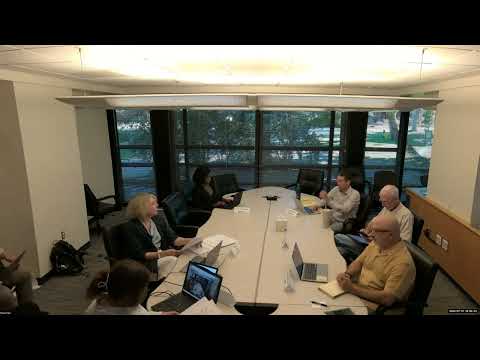
The Menlo Park Environmental Quality Commission on July 15 denied an appeal and upheld the city arborist’s decision to refuse a development-based heritage-tree removal permit for a large coast live oak at 2174 Clayton Drive.
City arborist Jillian Keller told the commission the tree is a native coast live oak in very good health, roughly 55 feet tall and appraised at about $8,000, and she urged commissioners to uphold staff’s denial. “Today, I’m asking you to uphold the denial of the removal of this healthy native coast live oak,” Keller said, describing the tree’s environmental benefits and the limitations of relying solely on an appraisal-based mitigation framework.
Keller testified that the applicant’s alternative-design estimate to preserve the tree — using pier foundations and careful excavation to avoid severing structural roots — was about $55,000, substantially higher than the tree’s appraised value. Under Menlo Park’s administrative guideline, an alternative design that exceeds 140% of the tree’s appraised value typically makes removal financially feasible. Keller said that dynamic often leaves the ordinance ineffective for preserving trees on development sites.
The appellant, Isabella Sun, presented site plans and said the tree is not on the property line and that redesigns to keep the tree would substantially change the house layout and add cost. “We still want to remove the tree number 9 since keeping it will be very difficult for the design, and the cost will be $55,000, which is much higher than … 140% of the tree appraised value,” Sun said, explaining the family’s concern about project feasibility and tight finances after purchasing the lot at market highs.
Commissioners pressed staff and the applicant on technical details. Keller outlined typical preservation steps — pier foundations, exploratory hand excavation or high-pressure air to locate roots, on-site arborist supervision and monitoring — and said a reduced clearance (discussed at 4 feet versus staff’s 5.5-foot guideline) and careful construction could sometimes make preservation feasible depending on field conditions.
Commissioner John McKenna voiced concern about the commission’s authority under the existing Heritage Tree Ordinance and cautioned against asserting an outcome the ordinance would not support, saying he wished the ordinance better valued trees but that the commission must work within current standards. Commissioner Nabil Saad said he favored upholding staff’s decision while also encouraging the applicant to pursue a compromise design that could reduce the preservation cost.
After deliberations the commission took motions and votes. A motion to deny the appeal (to uphold staff’s denial) carried among those present and the subsequent motion to grant the appeal failed; staff summarized that the commission would deny the appeal and the applicant was advised she could pursue a further appeal to City Council if she chose.
Keller and staff described the practical implications if the appeal is denied: the applicant must revise plan sets to show the alternative foundation details and excavation/protection methods, include the agreed replacement tree plantings in planning and building permits, and provide monitoring reports and final inspections to verify mitigation and planting prior to a certificate of occupancy. “When we issue a heritage tree removal permit, the approval of the removal is conditioned on … the replacement trees,” Keller said, noting the plantings are tracked through multiple permit phases and verified at final inspection.
The hearing underscored tensions between Menlo Park’s ordinance language, construction costs in the region and commissioners’ desire to preserve large, mature trees.
The commission’s action was procedural and administrative: it applied the Heritage Tree Ordinance and administrative guidelines to the record and found staff’s denial to be the appropriate disposition on the materials presented. The appellant was informed of the option to appeal the EQC decision to the City Council.