Get Full Government Meeting Transcripts, Videos, & Alerts Forever!
Get email alerts on the Reconciliation Framework topic
No spam. Unsubscribe anytime.
House Budget Committee advances $95 billion reconciliation framework, earmarks $10 billion for House Administration Committee
Summary
The House Budget Committee advanced a $95 billion reconciliation framework by a 20–14 vote, including $73 billion for defense, $12 billion for agriculture and $10 billion directed to the House Administration Committee to support parts of the Save America Act and election-integrity measures, Rep. Brian Stile said.
The House Budget Committee advanced a $95 billion reconciliation framework by a 20–14 vote that includes $73 billion for defense and intelligence, $12 billion for agriculture and $10 billion that Rep. Brian Stile said is intended to support the House Administration Committee’s role in advancing parts of the Save America Act.
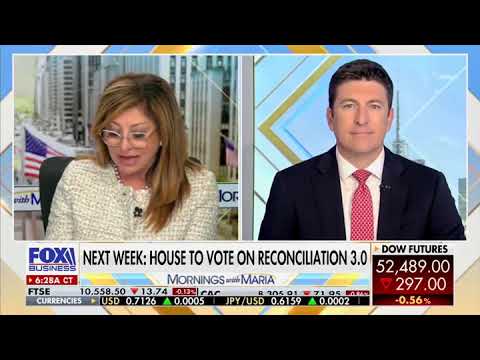
"Welcome back to House Budget Committee voting 20 to 14 to advance the framework for reconciliation 3.0," the program host said at the top of the segment, reporting the committee vote and the framework totals. Stile, identified on the program as chairman of the House Administration Committee, described the $10 billion allocation as a vehicle to push election-integrity provisions in the Save America Act.
Stile said the legislation’s focus will be election integrity and that the reconciliation vehicle could "incentivize states to do this or require states to do this as well." He argued the package provides an opening to press states to verify citizenship in certain contexts and to strengthen voter identification rules: "We need to make real and substantive progress as it relates to election integrity."
On specifics, Stile told the interviewer that states should vet whether individuals are citizens when issuing driver’s licenses and that some states — he named Illinois, New York and California — have policies he described as giving licenses to noncitizens. He added that "there are already 23 states that have a really good voter ID law on the books" and that 36 states have some form of voter-ID requirement, and suggested federal incentives in the framework could encourage wider adoption.
Questions remain about whether the framework can clear the Senate. Stile said House members are talking with Senate colleagues, including Senator Ron Johnson, and with the White House, and expressed hope the legislative vehicle will be finished and signed into law. The host flagged concerns from the House Freedom Caucus and others that reconciliation 3.0 must include offsets; Stile acknowledged the House-passed version lacks offsets and said he hopes the Senate will add them.
Stile also cited administration efforts to cut waste, fraud and abuse as complementary to finding savings that could help address fiscal concerns. He referenced recent engagements in Wisconsin and said rooting out program abuses — he named Medicaid as an example — could yield savings.
The framework’s advancement in committee does not itself enact the proposals; the measure faces further legislative steps in the House and likely negotiations in the Senate. The Stop Insider Trading Act introduced by Stile was also mentioned as coming to the floor next week and could proceed separately.