Get Full Government Meeting Transcripts, Videos, & Alerts Forever!
Get email alerts on the Public Safety Waterways topic
No spam. Unsubscribe anytime.
Commission advances Dunns Creek no-wake ordinance after safety testimony
Summary
Putnam County commissioners voted to advance a proposed shore-to-shore no-wake ordinance at Dunns Creek to a second reading after residents and commissioners cited safety concerns around a narrow, hairpin turn and an ADA kayak launch; the measure will proceed to FWC review as required.
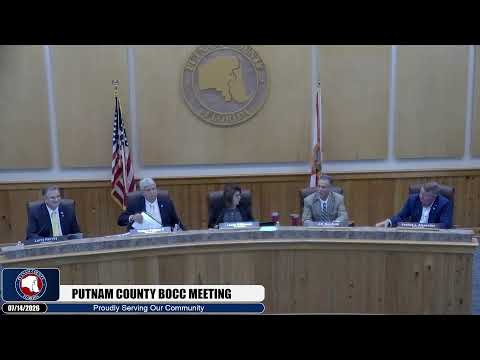
Putnam County commissioners voted July 14 to advance a proposed shore-to-shore no-wake ordinance for a narrow hairpin on Dunns Creek to a second reading after residents and commissioners described collision and wake hazards near an ADA-compliant kayak launch.
The measure, introduced by Commissioner Josh Alexander, targets the corner adjacent to Dunns Creek State Park and would extend from shore to shore for a limited distance to protect paddlers and an accessible kayak launch. Sam Carr, a nearby resident and paddling organizer, told the board he first raised safety concerns years ago after seeing paddlers and fast bass boats share the junction: "Somebody's gonna get killed there one day if we can continue to allow 50-mile-an-hour boats coming past that particular part." Rob Matt and Larry Flaman, who said they work with Waterways and Trails and the Friends of Dunns Creek State Park, also supported the ordinance, citing frequent high-speed passages and erosion of park banks.
Commissioners asked staff and legal counsel about enforcement and statutory authority. County Attorney (the county attorney) confirmed the county must pass an ordinance and submit it to the Florida Fish and Wildlife Conservation Commission for review under Florida Statute 327.46; FWC will assess whether there is "competent substantial evidence" to protect the public and typically requests additional evidence within a 30–90 day review window.
Several commissioners acknowledged concerns about impacts on bass tournaments and other recreational boaters. Chair raised the question of whether evidence of accidents, vessel counts or navigational studies were available; Commissioner Harvey urged outreach and signage as possible mitigations while supporting the principle of enhanced safety. Commissioner Alexander said the ordinance is narrowly tailored to the ADA launch location and stressed the goal of preventing injury: "If it's cost somebody five minutes, I'm going to fight for that."
The board voted unanimously to send the proposed ordinance to a second public hearing and reading; the clerk and county attorney later amended the advertised second-reading date to July 28 at 9:00 a.m. for procedural compliance. Next steps include any additional public comment at that second reading and the FWC review required before an on-water regulatory change would take effect.
What happens next: the commission will hold the second reading on the advertised date; if the board adopts the ordinance, it must submit the local ordinance and supporting evidence to FWC for final determination and possible implementation by state authority.