Get Full Government Meeting Transcripts, Videos, & Alerts Forever!
Get email alerts on the Disaster Response topic
No spam. Unsubscribe anytime.
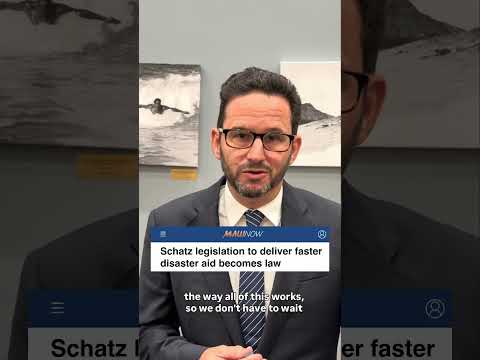
Lawmaker says new law will speed disaster recovery after Lahaina fires
Summary
A lawmaker said a recently passed law will let federal recovery begin sooner after disasters such as the Lahaina fires by reducing waits for HUD and congressional steps; the speaker noted FEMA still responds quickly but called long-term recovery "complicated and cumbersome."
A lawmaker said a law they introduced and helped pass will let federal recovery begin more quickly after disasters such as the Lahaina fires, bypassing some of the waiting and bureaucratic steps the speaker called obstacles to rebuilding.
The remarks, delivered in a short statement, followed the speaker's assessment of recent disasters across Hawaii, including Lahaina, and an observation that "one of the things that we learned through all of these disasters...is how long it takes for the federal government to mobilize on the recovery side." The speaker contrasted that with immediate response by federal agencies: "FEMA usually shows up within 12 hours, 24 hours of a disaster occurring," they said, adding that "the recovery side is really complicated and cumbersome."
The lawmaker said, "I introduced and passed a law to change the way all of this works," and described the purpose as avoiding a need to "wait for an act of congress and HUD to do a bunch of bureaucratic stuff before we can start with the recovery." The speaker did not provide the statute name, bill number, or implementation details in these remarks.
Advocates and residents in disaster-affected areas say faster access to recovery resources can shorten displacement and speed rebuilding; the speaker framed the change as "good news for people in Hawaii and across the country who want to get on with their recoveries." The transcript does not record further explanation of how the new law changes existing HUD or FEMA processes, nor does it include a timeline for implementation.
The remarks focused on policy intent rather than procedural detail: the speaker emphasized the contrast between FEMA's rapid emergency response and the slower, more complex recovery process handled by other federal actors. Additional information — including the law's text, effective date, and any implementing guidance from HUD or FEMA — was not provided in the statement.