Get Full Government Meeting Transcripts, Videos, & Alerts Forever!
Get email alerts on the Utilities Permits topic
No spam. Unsubscribe anytime.
St. Clair County delays Alabama Power pole permits pending lane and right-of-way protections
Summary
The St. Clair County Commission voted to withhold permits for Alabama Power pole work on Sandy Road/Broadway until the company and county agree on traffic continuity (one lane open), pad/approach protections and pole relocations affecting county right-of-way.
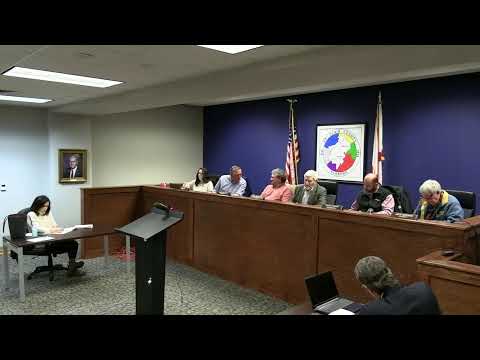
The St. Clair County Commission voted to withhold issuance of temporary permits for Alabama Power’s planned pole work on Sandy Road and Broadway until the utility and county reach an agreement to keep at least one traffic lane open and limit damage to county roads. The decision followed a report by County Engineer Dan Dahlke that the project, as currently planned, would require sections of roadway to be closed for up to six hours while crews set 21–24 poles and that roughly five poles would affect the county’s right-of-way directly.
A commissioner (the member who made the motion was later identified in the meeting as Commissioner Jeff Brown) moved that the county not issue permits “until we come up by agreement” and that Alabama Power relocate poles off the most critical roadway segments. Dahlke described the problem to the commission: the current plans would “close down this road” for periods and “there’s at least 21 poles that they would have to close the road down in the current plans.” He told the board staff had not received a formal permit application and recommended refusing issuance until mitigation measures were agreed.
Commissioners and staff discussed practical steps to reduce impacts, including building 11-foot shoulders or approach pads, coordinating crane outriggers to stay in one lane, and relocating poles that fall within county right-of-way. Dahlke said creating a wide enough pad at certain locations and coordinating rights-of-way between the county and the utility could reduce the number of days the road must be fully closed. The chair directed staff to continue working with Alabama Power to develop a plan that preserves traffic flow and protects the road surface.
The commission recorded the motion and, after voice votes, directed staff to withhold permits pending the agreement and to pursue engineering options to provide a single 11-foot lane during work. The outcome was procedural direction (staff to negotiate and return with a plan) rather than a fine-grained engineering specification; Dahlke and other staff were instructed to prepare options and assess right-of-way pad solutions.
Next steps: staff will continue coordination with Alabama Power and report back with proposed right-of-way/pad designs and a plan to maintain traffic continuity before the county issues permits.