Get Full Government Meeting Transcripts, Videos, & Alerts Forever!
Get email alerts on the Temporary Housing topic
No spam. Unsubscribe anytime.
Pulaski planning commission to hold public hearing on temporary housing and emergency warming centers
Summary
The Town of Pulaski Planning Commission agreed March 9 to prepare draft zoning language and advertise a combined public hearing on temporary housing shelters and emergency warming centers, proposing a special‑exception process and a suggested 180‑day limit for temporary housing operations.
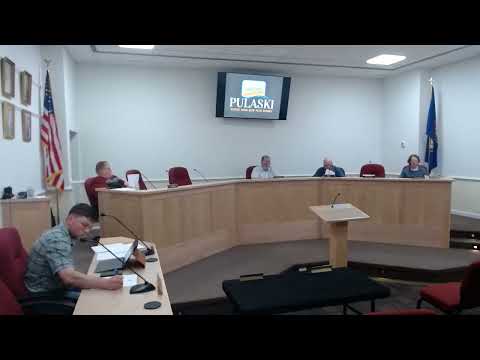
The Town of Pulaski Planning Commission agreed at its March 9 meeting to prepare and send draft language to the town attorney and to schedule a combined public hearing on definitions and zoning rules for temporary housing shelters and emergency warming centers.
The commission discussed a multi‑page model ordinance from Excelsior Springs, Missouri, and compared it with Pulaski’s current, two‑sentence warming‑station definition. Commissioners said the town’s existing definition lacks specifics on length of stay, services and operating rules and should require applicants to seek approval through a special‑exception process. The chair said the special‑exception approach gives the town and applicants flexibility: "We don't really spell out the length of stay or what specific services are offered... we left that to whoever it was that wanted to open the warming station to bring that to us when they ask for a special exception." (Chair)
Commissioners reviewed the town’s current 'house of worship' accessory‑use wording as read aloud by a staff member: "As an accessory use, emergency warming stations are permitted as defined by the building code and subject to meeting applicable building code and fire code requirements that only accept Pulaski County residents and only operate from 6PM to 7AM." (Staff member) Members flagged that language for consideration as they adapt the model ordinance.
On operational limits for temporary housing, discussion centered on removing a strict 24‑hour‑per‑day staffing requirement and instead allowing stays "continuously for up to 180 days" in the definition, with the application for the special exception specifying the services the applicant will provide. Commissioners said removing rigid operational prescriptions avoids creating standards some providers could not meet, while the special‑exception review would let the commission and building/fire officials require appropriate monitoring when needed.
The group discussed recent state legislation and potential preemption. Commissioners named Senate Bill 367 and noted language later incorporated into Senate Bill 388; they said the town will watch those bills’ final forms because state action could limit local discretion for certain religious or nonprofit properties.
The commission asked staff to prepare a draft ordinance amendment and to forward it to the town attorney for review before the public‑hearing notice is posted. Members agreed to combine the temporary‑housing definition and the small warming‑station change into a single public hearing, targeting April or May depending on the attorney’s timeline.
Next steps: staff will draft revised language, send it to the town attorney, and present a public‑hearing advertisement for the commission’s approval once the legal review is complete.