Get Full Government Meeting Transcripts, Videos, & Alerts Forever!
Get email alerts on the Wastewater Infrastructure topic
No spam. Unsubscribe anytime.
Engineering review: Pulaski's sewer lift stations need multi-million-dollar work; council asked to pursue grants
Summary
An engineering presentation to the Pulaski Town Council identified extensive mechanical and structural problems at multiple sewer pump stations and estimated roughly $10 million in repairs; the town and consultants outlined USDA, DEQ and CDBG grant/loan options to limit the local tax burden.
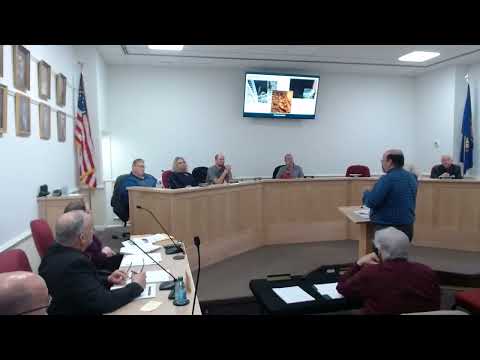
Matt Gross, project manager with Hurt & Profit, told the Pulaski Town Council that four of the town's sewer pump stations require substantial work and that Pump Station 4A, which handles most of the town's flow, is "in rough shape." Gross said variable-frequency drives and grit-removal equipment were not functioning, one of four headworks pumps was nonoperational on inspection, and a 460,000-gallon equalization tank was out of service, reducing storage and increasing risk of overflows.
Gross recommended prioritizing the Kreitzer Pump Station for complete replacement because of structural failures and exposed piping, and he described specific problems at several stations: 4A requires major rehabilitation, 4B needs repairs to pumps and control valves, Chrysler pump station likely needs full replacement, and James Hardie station requires minor security/fencing and a control change at an estimated lower cost. His current, stage-of-review cost estimates were approximately $4.5 million for Pump Station 4A, $3.1 million for 4B, about $2.2 million to replace the Chrysler pump station and roughly $70,000 of minor items at James Hardie; council members and staff rounded the total to about $9.9—10 million in needed capital work.
During questions, a council member asked how much of that total would fall to town taxpayers. Town Manager Todd and Gross outlined possible financing paths: USDA Rural Development loans (long-term, 40-year financing), Virginia Department of Environmental Quality construction funds with principal forgiveness (the program's next construction deadline was noted for July 2026 for 2027 funding), and Community Development Block Grant (DHCD/CDBG) construction funds, which require the project area to meet a 60 percent low-to-moderate-income threshold. Gross also said some projects may be staged and not all elements would have to be completed immediately, but that deferred maintenance will continue to raise costs.
Gross advised establishing an ongoing maintenance allocation (he suggested a target of about 10 percent annually if the town can afford it) to prevent repeat large-scale failures. Council members and the manager discussed staging, possible congressional or DEQ funding, and the potential role of a professional regional operator; the town manager noted an existing relationship with Peppers Ferry and said staff would pursue grant and partnership options and bring shovel-ready details back to council.
The presentation closed with the council requesting staff to continue pursuing funding options and to return with more detailed financing and timeline recommendations.