Get Full Government Meeting Transcripts, Videos, & Alerts Forever!
Get email alerts on the Temporary Housing topic
No spam. Unsubscribe anytime.
Planning commission begins work on definition for temporary housing shelters and emergency warming stations
Summary
The Pulaski Planning Commission opened a discussion to draft a concise definition for ‘temporary housing shelters’ and to clarify emergency warming‑station rules, citing a gap between emergency provisions and longer short‑term residential uses. Staff will circulate model language and consult the town attorney.
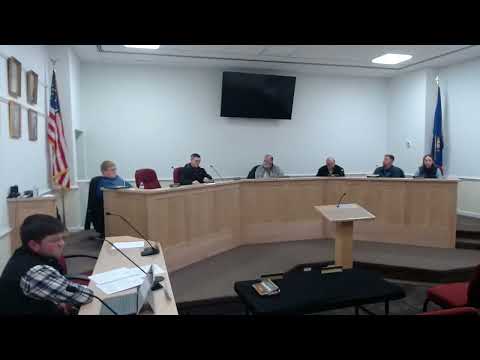
The Pulaski Planning Commission on Feb. 9 began drafting a town definition for “temporary housing shelter” and discussed how emergency warming stations should be regulated.
Chair led the new‑business discussion, saying, “Under new business, we need to talk about the temporary housing shelter definition, and emergency warming station.” Commissioners noted the town currently relies on emergency provisions and has no separate, non‑emergency temporary‑housing definition. A commissioner observed, “Do we have a definition now for a temporary housing shelter?” and the group confirmed there is none beyond emergency language.
A commissioner who reviewed neighboring localities recommended a short, broad definition to start. Committee member read a drafted definition from an outside summary: “Temporary housing shelter, a facility that provides short term residential accommodations, sleeping .25, and supportive services to individuals or families experiencing homelessness or housing instability, typically operating continuously 24 hours, stays longer than emergency overnight refuge.” The commission agreed the model language and accompanying ordinance examples would be a useful draft to tailor locally.
Staff warned commissioners to avoid overly broad language that would be hard to reverse if allowed by‑right and suggested limiting certain operational details to special‑exception or conditional use reviews so site specifics (neighborhood fit, services offered, hours of operation) can be assessed case‑by‑case. Commissioners discussed whether churches offering shelter services should apply via special exception and whether some fees should be waived for houses of worship; Chair said the town should try not to “burden these houses of worship any more than we have to.”
A staff member also flagged recent state legislation and summaries that could affect local authority. The commission reviewed a circulating Virginia bill (cited in meeting materials as bill 367) that would allow administrative approval for housing by tax‑exempt religious organizations and noted its delayed effective date of Sept. 1, 2026 — a development members said they will monitor because it could affect local zoning options.
The commission agreed staff (Olivia) will circulate the article and the sample ordinance language discussed, then work with the town attorney to scope language and enforcement mechanisms. Commissioners scheduled continued consideration of definitions at the March 9 meeting.